


Plus Pack proud contributor to
European Plastics Pact
The European Plastics Pact, established in 2020, aims to foster collaboration and innovation across borders and industries to accelerate the transition to a circular plastics economy in Europe. This initiative brings together companies and organizations from diverse sectors and countries to collectively work towards achieving its objectives. Plus Pack is proud to be one of the 147 companies and 21 countries that have pledged their commitment to the European Plastics Pact. The pact is built upon four key targets:
- Target 1: Reusability and recyclability
- Target 2: Responsible use of plastics
- Target 3: Collection, sorting and recycling
- Target 4: Use of recycled plastics
Read more about our commitment and work within the European Plastics pact.

plastics for
food containers
At Plus Pack, we consider material efficiency and design for recycling throughout the development of plastic packaging for food – from product development and procurement to marketing and sales. We support the principles of UN Sustainable Development Goal 12, “Responsible Consumption and Production,” by focusing on the design and manufacturing of plastic food packaging.
Through continuous innovation, we strive to “do more and better with less,” with a focus on efficient material use and packaging designed for recycling.
Plastic Reduction Efforts in Denmark:
A CIRCULAR PATH FORWARD
Plus Pack actively collaborates with Dansk Industri and the Danish Design Guide on plastic reduction efforts in Denmark. Through this partnership, we focus on material efficiency and reducing unnecessary plastic use while maintaining product integrity. By collaborating with Dansk Industri, we draw on industry expertise and collective action to support plastic reduction initiatives in Denmark.
Additionally, our collaboration with the Danish Design Guide supports our work with functionality, packaging design and efficient material use. Together, we focus on packaging solutions that use materials efficiently and are designed with relevant sorting and recycling systems in mind.
Read more about the design guide here.
Denmark plastic recycling rate
A key indicator
In Denmark, the plastic recycling rate is increasing, reflecting a growing focus on recycling and resource use. Recycled plastic food packaging can help keep plastic materials in circulation, while packaging designed for recycling can support sorting and recycling where suitable systems are available. It is therefore important to select materials and packaging designs that are compatible with relevant recycling processes.
The Danish Design Guide for Reuse and Recycling provides guidance on reuse and recycling, including material selection and design for disassembly. Applying these design principles can support compatibility with Denmark’s collection, sorting and recycling systems.
Plastic waste
as a ressource
Plastic waste can be a resource when it is collected, sorted and processed into secondary raw materials. In Europe, efforts to recycle plastic packaging continue, with an increasing focus on keeping materials in circulation through suitable recycling systems.
Through appropriate recycling technologies, selected plastic waste streams can be processed into raw materials for new products. The actual recycling outcome depends on the material, packaging design and the collection, sorting and recycling systems available.
LEARN MORE
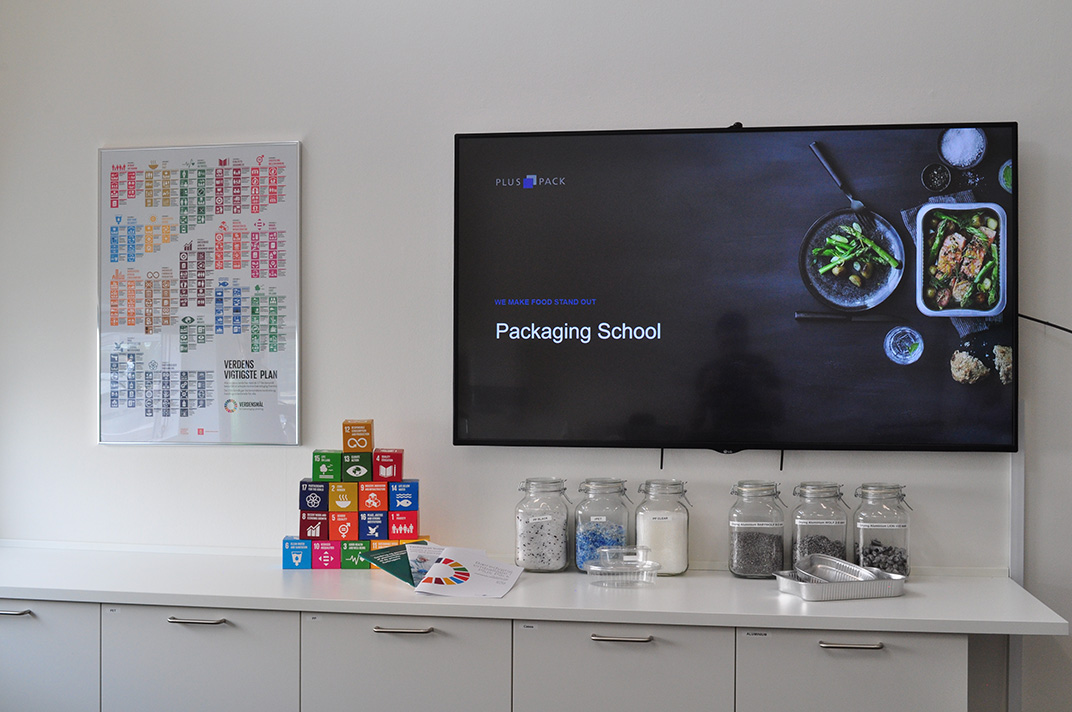
Packaging School
Join our packaging school
Packaging School guides you in the complex world of food packaging. Many things should be taken into consideration before deciding on a new packaging solution.
Approach
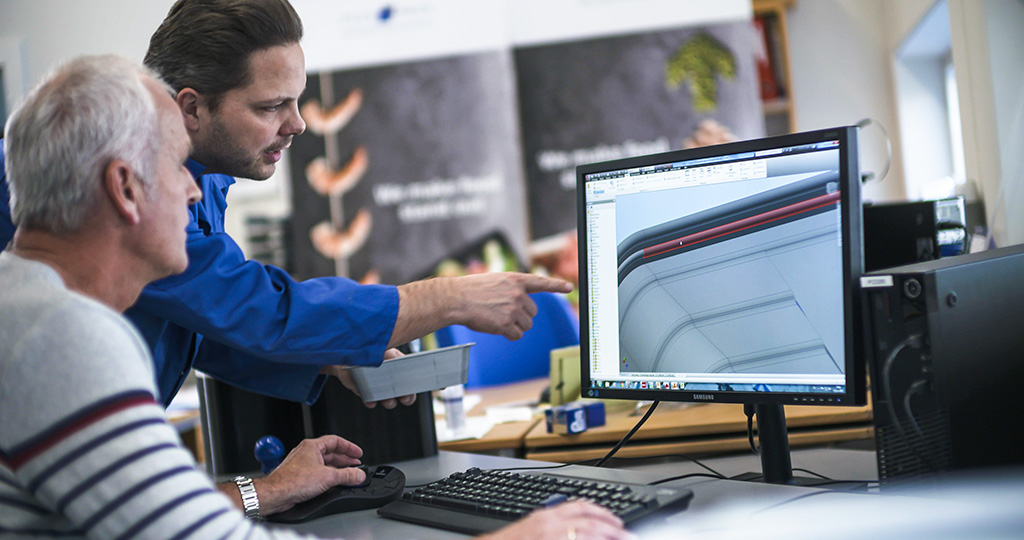
Customized solutions to fit your needs
Are you struggling to find an optimal packaging solution, maybe you need a customized product? We have for decades been specializing in customizing food packaging solutions.