

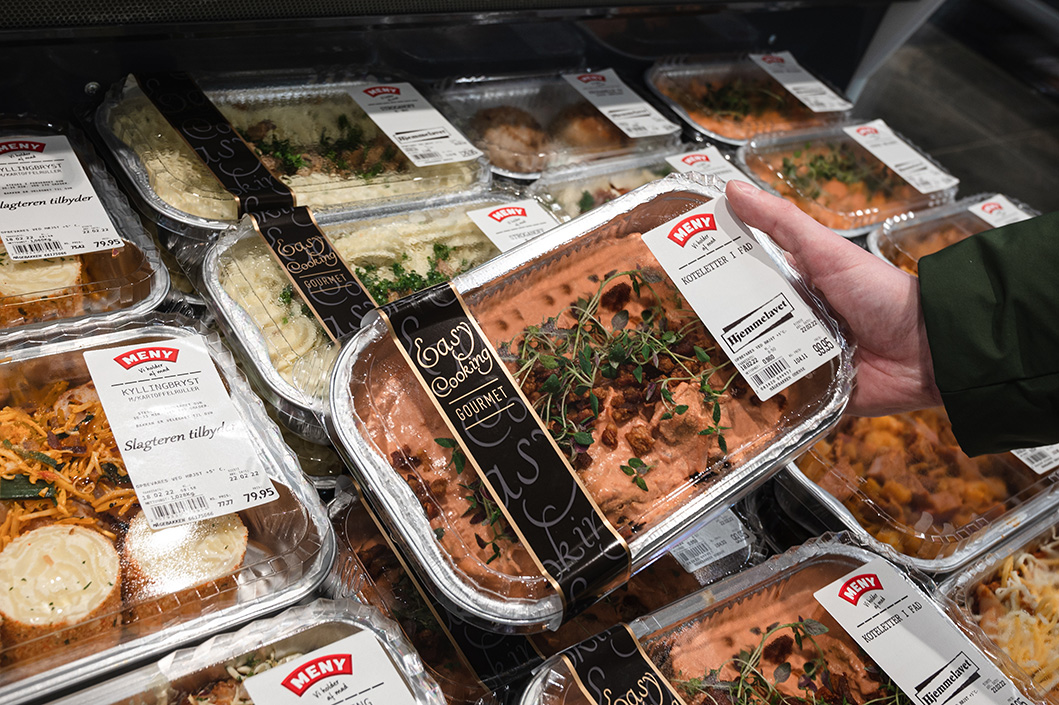

Ready Meal Packaging for Ready-to-Eat, Ready-to-Heat and Ready-to-Cook Meals
Ready meal packaging needs to match both the food product and the way the meal will be prepared. A chilled ready-to-eat salad requires different packaging properties from a microwaveable meal, an ovenable dish or a grill-ready meal kit.
Plus Pack develops and manufactures ready meal trays, containers and lids for professional food applications across distribution, retail and industrial food production. Our portfolio covers ready-to-eat, ready-to-heat and ready-to-cook concepts in plastic and aluminium, with options ranging from broad standard assortments to industrial filling, sealing and customised packaging.
Whether you are developing a new convenience food packaging range or optimising existing ready-made meals packaging, the starting point is understanding how the packaging needs to perform throughout production, distribution, preparation and serving.
What Does Ready Meal Packaging Need to Deliver?
Food packaging for ready meals has several functions to perform. It needs to protect the food, work with the intended preparation method and perform reliably throughout filling, sealing, storage, distribution and final use.
The right packaging for ready meals therefore depends on factors such as:
· Temperature: Will the meal be chilled, frozen, microwaved, oven-heated or grilled?
· Food protection: What barrier and sealing properties does the food require?
· Shelf life: Which packaging and sealing configuration fits the required shelf-life ?
· Production: Does the tray need to run on automated equipment?
· Transport: How should the packaging stack and perform during storage and transport?
· Presentation: Does the food need visibility, compartments or special presentation ?
· Consumer preparation: Will the meal be eaten, reheated or cooked in the packaging?
These requirements make ready meal packaging more than a choice of tray shape or material. The complete packaging setup should fit the meal concept and the processes around it.

Ready Meal Packaging for Different Meal Concepts
Ready meals range from chilled salads and deli dishes to microwaveable meals, ovenable recipes and grill-ready meal kits.
As a result, ready to eat packaging and ready-to-heat or ready-to-cook packaging each have different requirements depending on how the food is stored, presented and ultimately prepared.
Ready-to-Eat Food Packaging
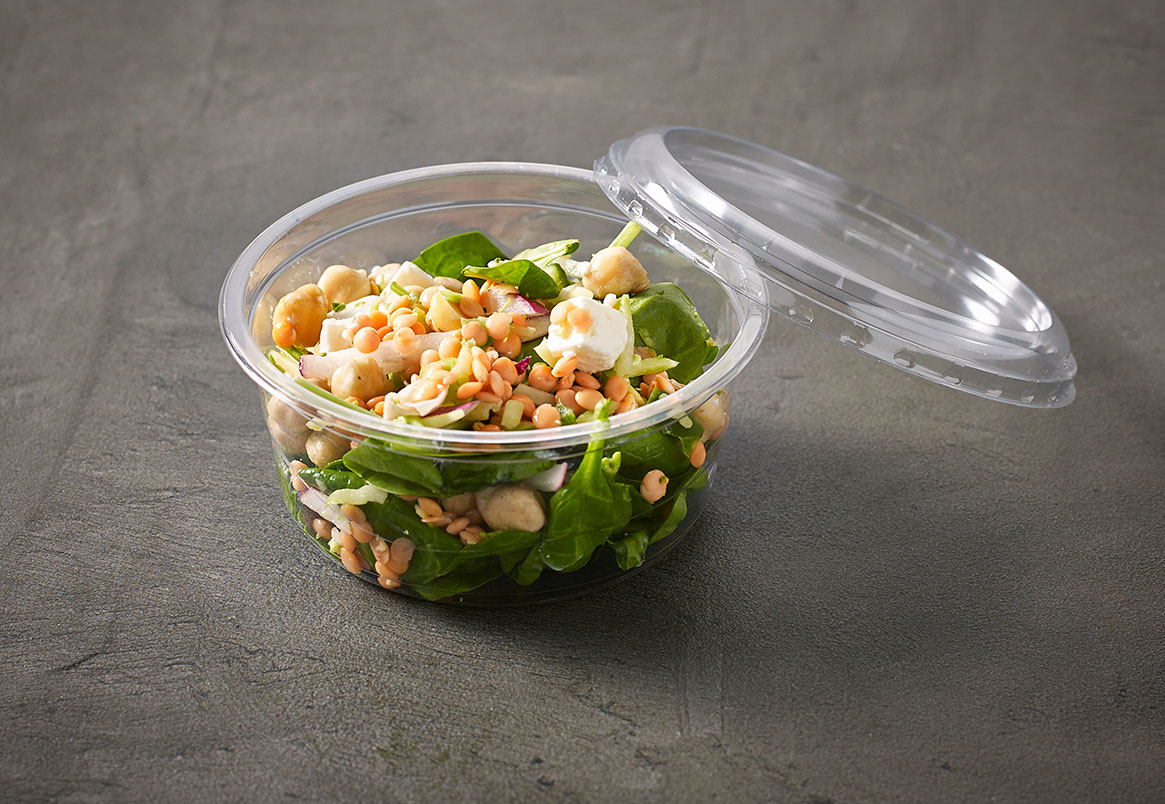
Ready-to-eat food packaging is used for meals that can be consumed without further cooking, including chilled salads, pasta dishes, deli meals, fruit, tapas and other prepared foods.
For these applications, product visibility, reliable closure, chilled performance and presentation can be important. Clear plastic ready meal trays in rPET, APET and DPET provide options for chilled and freezer applications, while different lids and sealing films can be selected according to the food product and packing process.
Ready-to-eat meal packaging should also support handling throughout filling, transport, retail presentation and consumption.
Ready-to-Heat Meal Packaging
Ready-to-heat packaging is used for prepared food that requires reheating before serving.
PP is commonly used for microwaveable ready meal packaging because it provides a higher temperature range than the PET materials typically used for chilled applications. CPET can provide another option where both microwave and conventional oven preparation are required.
Beyond temperature performance, ready-to-heat packaging needs to consider sealing, portion size, handling and how the consumer will prepare and serve the food.
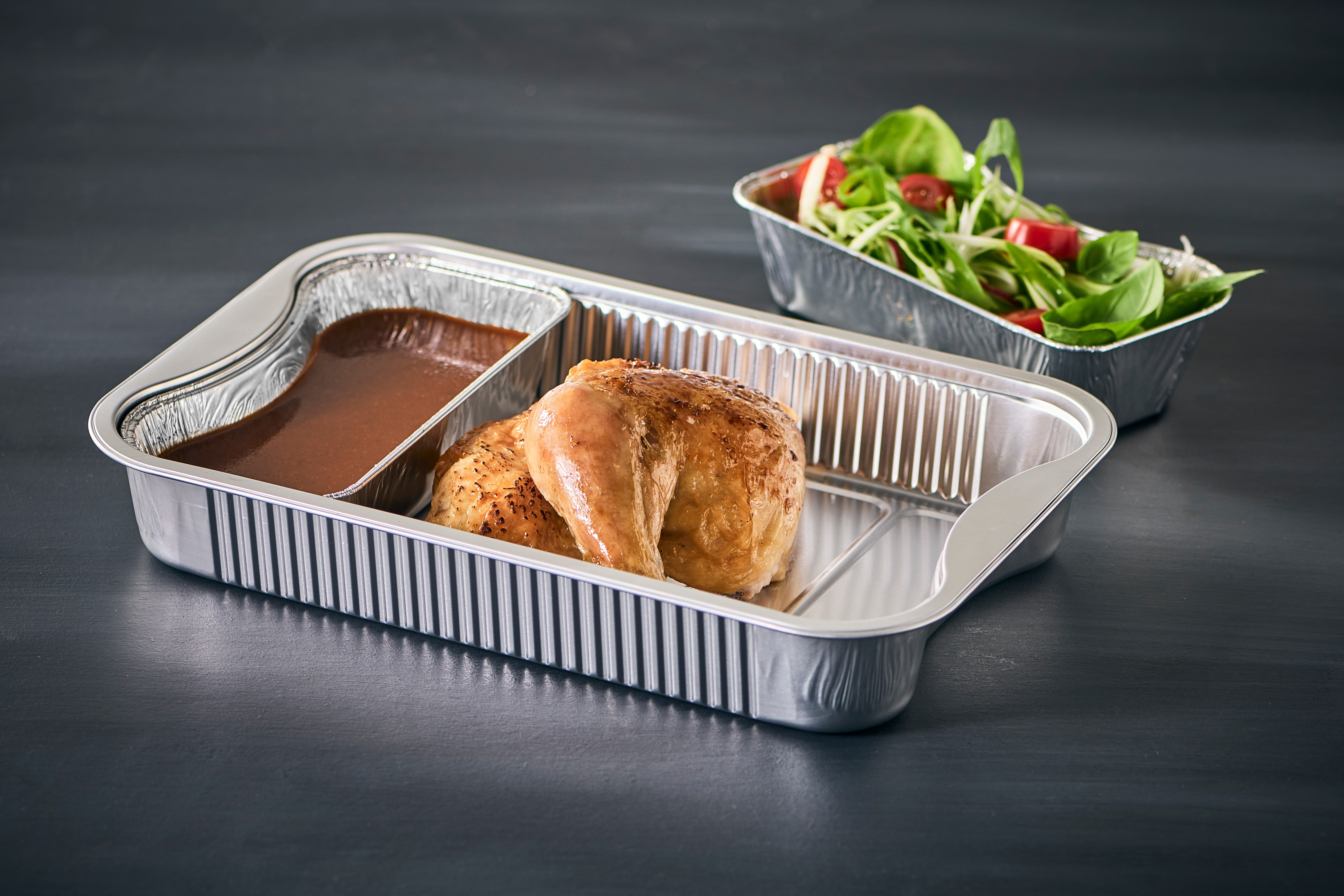
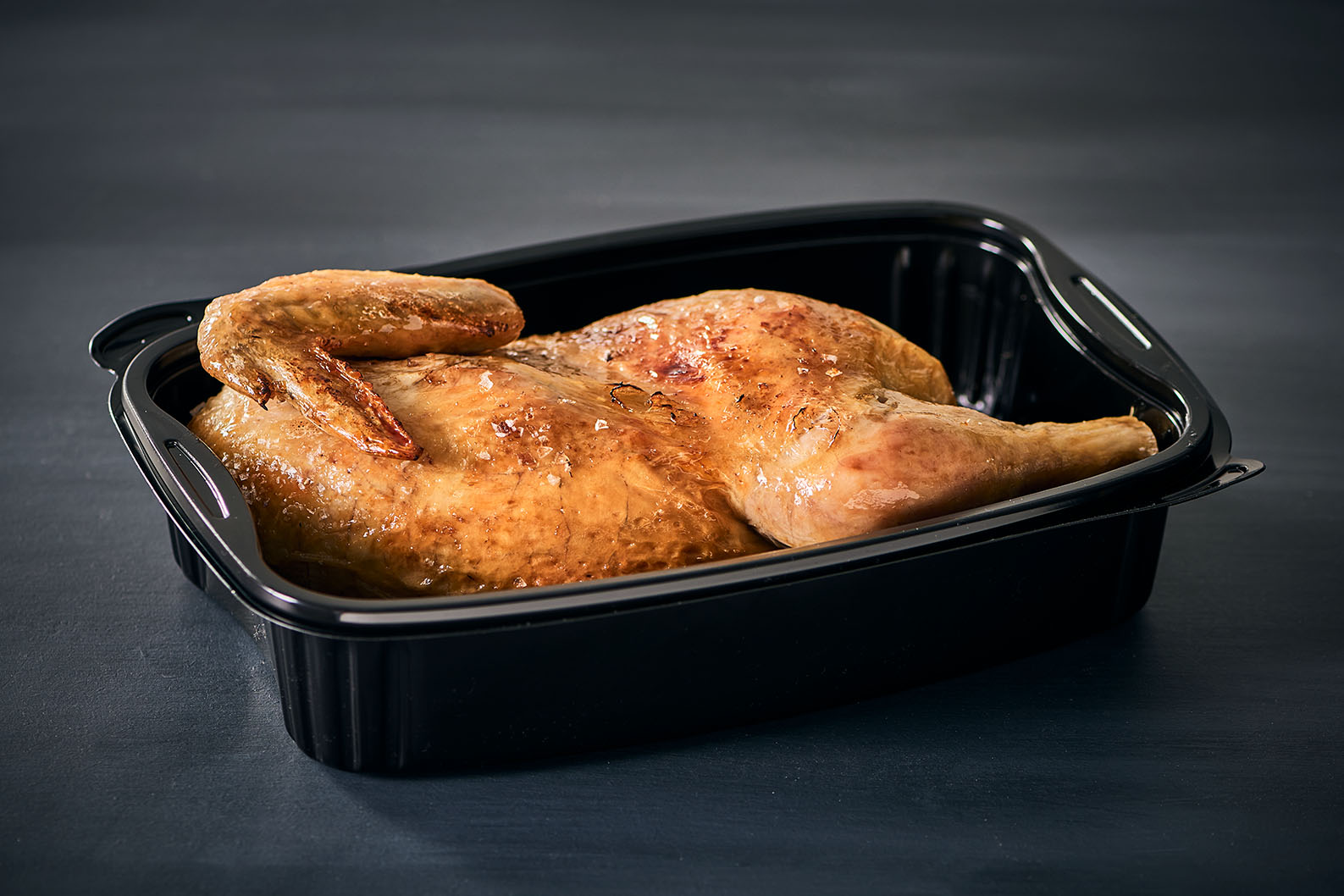
Ready-to-Cook and Ovenable Ready Meal Packaging
Ready-to-cook meals require packaging that can remain with the food during final preparation.
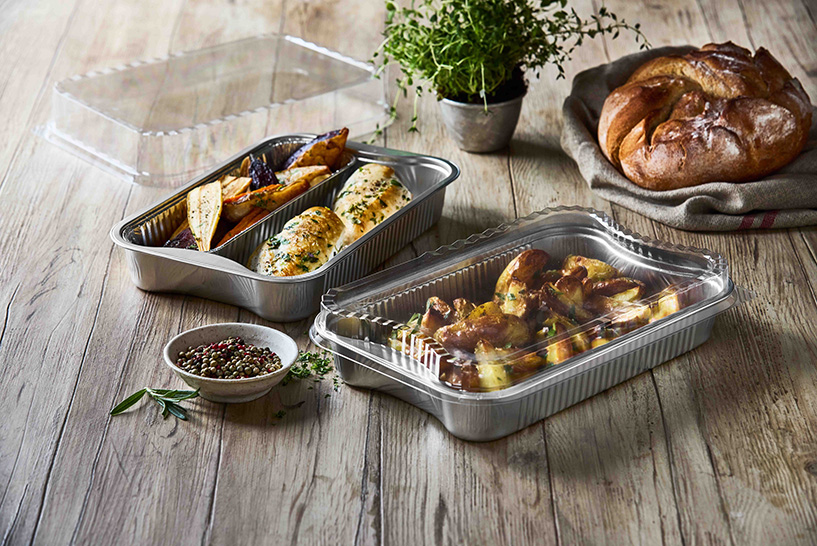
Depending on the application, CPET or aluminium can provide options for conventional oven preparation. Aluminium is also relevant for ready meal concepts requiring higher-temperature or grill performance.
Ovenable ready meal trays are particularly relevant for complete meals, meal kits, meat, fish, vegetables and other concepts where preparation and serving can take place directly in the packaging.
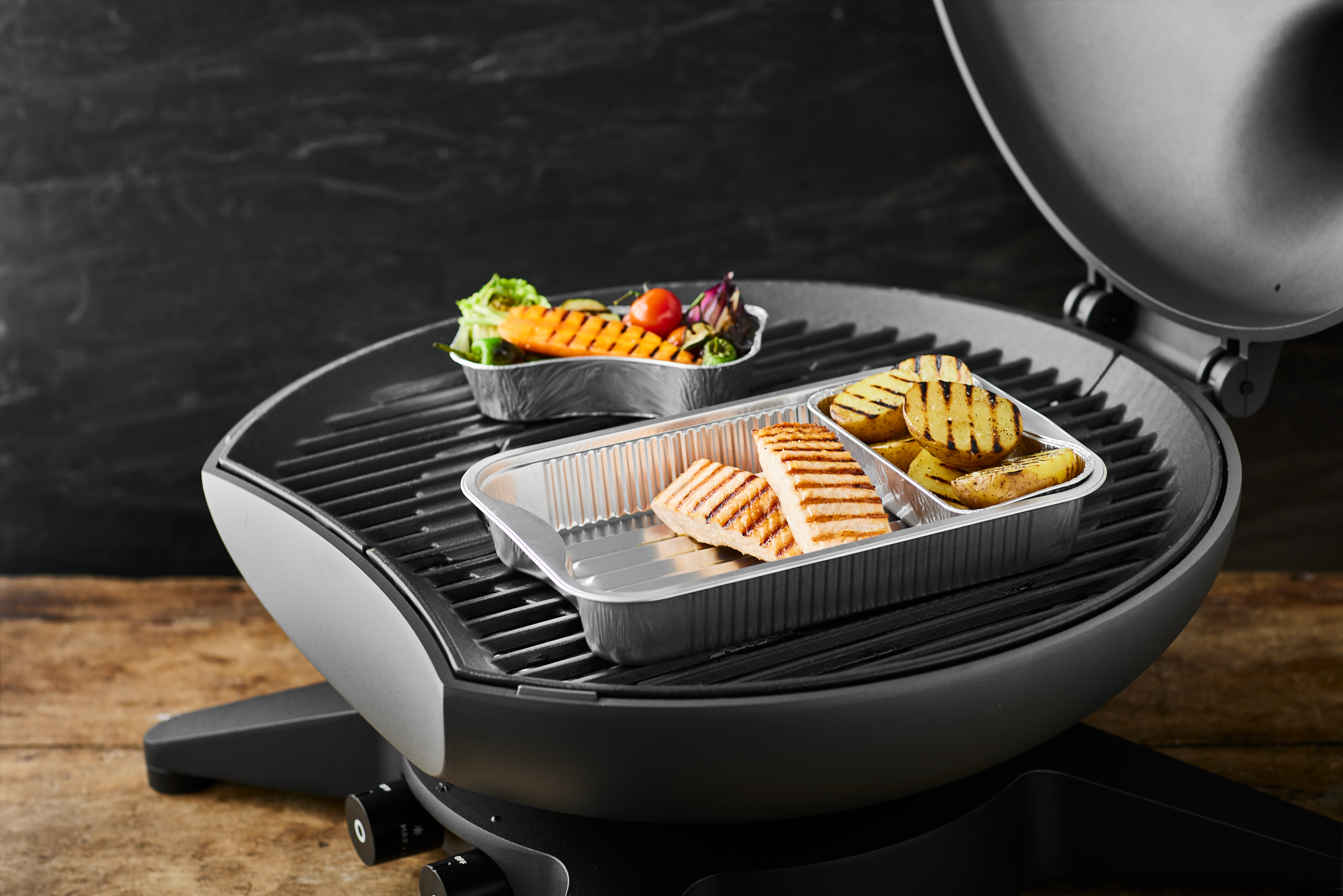
Grill-Ready Meal Packaging
Grill-ready food places additional demands on the packaging because the tray needs to perform under direct heat.
Aluminium containers can be used for grill-ready meal concepts including fish, meat, vegetables and mixed dishes. Plus Pack's Ready2Cook® range includes aluminium formats developed for ovenable and grill-ready applications and can move from preparation to cooking and serving.
Choosing the Right Material for Ready Meal Packaging
The right material for ready meal packaging depends primarily on the food, storage conditions, production process and preparation method.
Rather than choosing plastic or aluminium in isolation, the packaging material should be matched to the required temperature range, food characteristics and sealing setup.
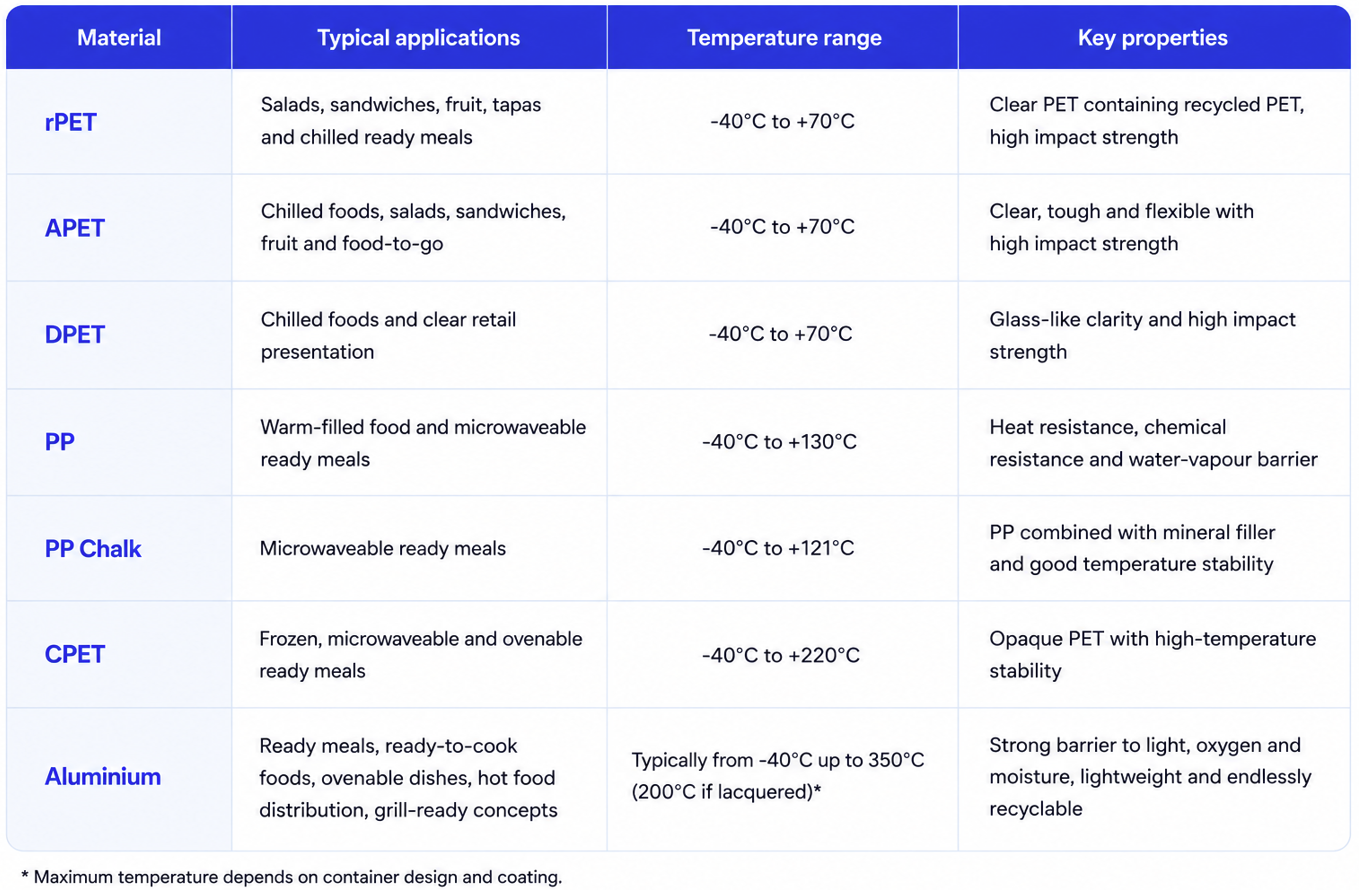
Plus Pack's Material Guide specifies material temperature ranges of -40°C to +70°C for rPET, APET and DPET, -40°C to +130°C for PP and -40°C to +220°C for CPET. Exact functionality and shelf life should be validated for the individual food and packaging setup.
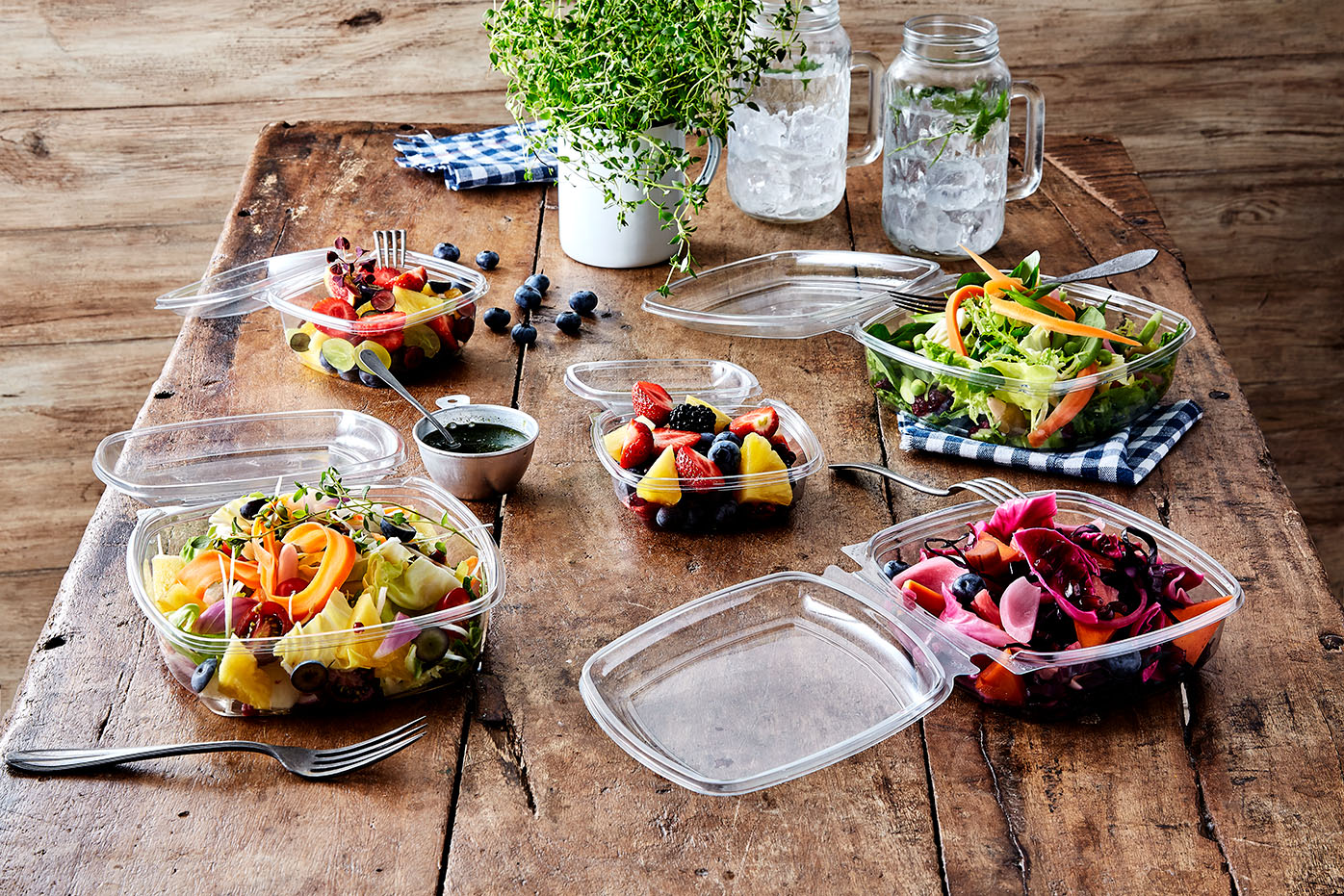
Plastic Packaging for Ready Meals
The right material for ready meal packaging depends primarily on the food, storage conditions, production process and preparation method.
rPET, APET and DPET are primarily relevant for chilled food and clear product presentation. PP is suited to warm-filled and microwaveable applications, while CPET provides an option for meals requiring microwave and conventional oven preparation.
For a deeper comparison of rPET, APET, DPET, PP, PP Chalk and CPET, including temperature ranges and material characteristics, explore our dedicated plastic packaging page.
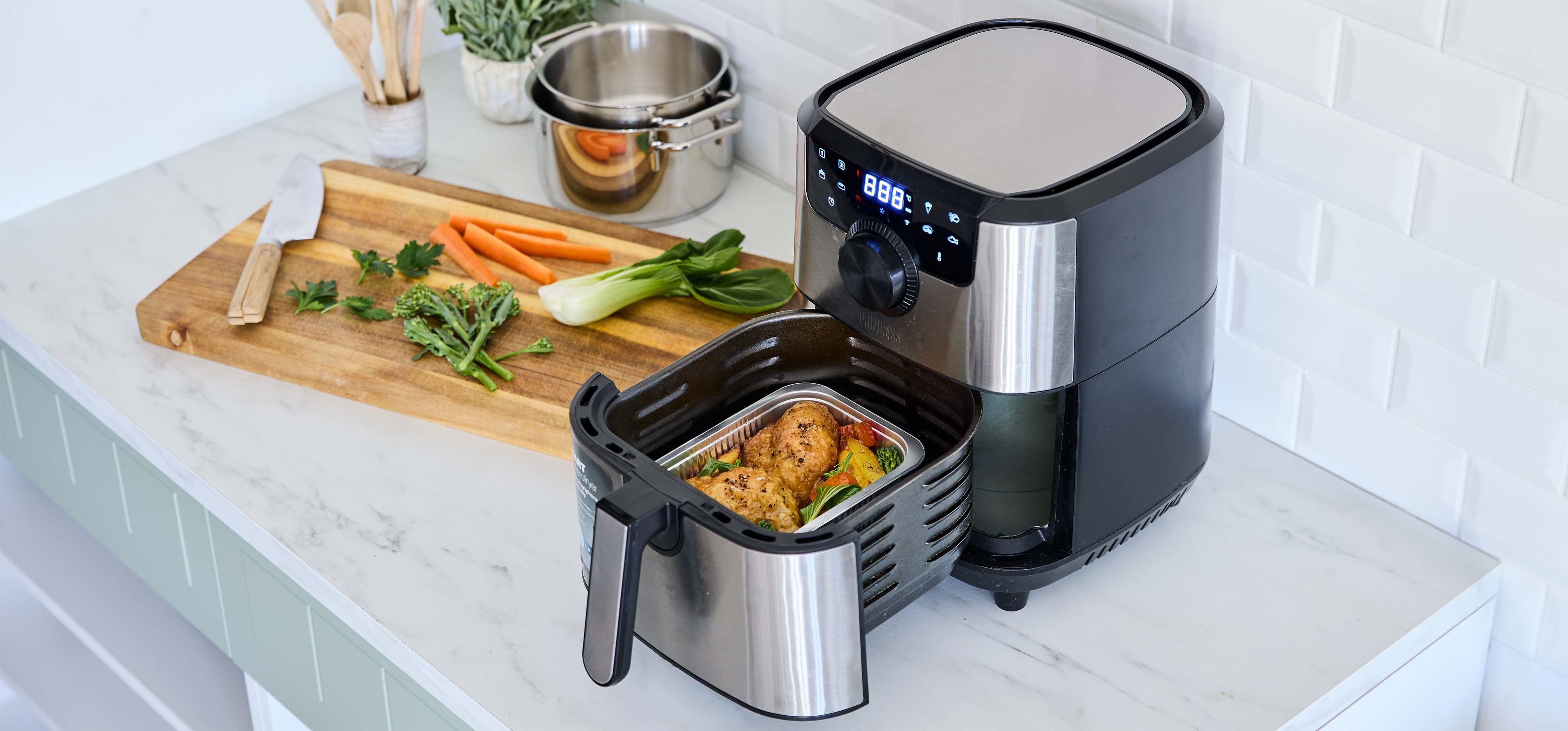
Aluminium Packaging for Ready Meals
Aluminium food packaging is relevant for ready meal concepts requiring oven, grill or other high-temperature performance.
Depending on the specific container and coating configuration, aluminium can be used across chilled, frozen, microwave, ovenable and grill-ready applications. The material also provides barrier properties and efficient heat distribution during preparation.
Explore the characteristics, temperature performance, applications and available aluminium food containers on our dedicated material page.
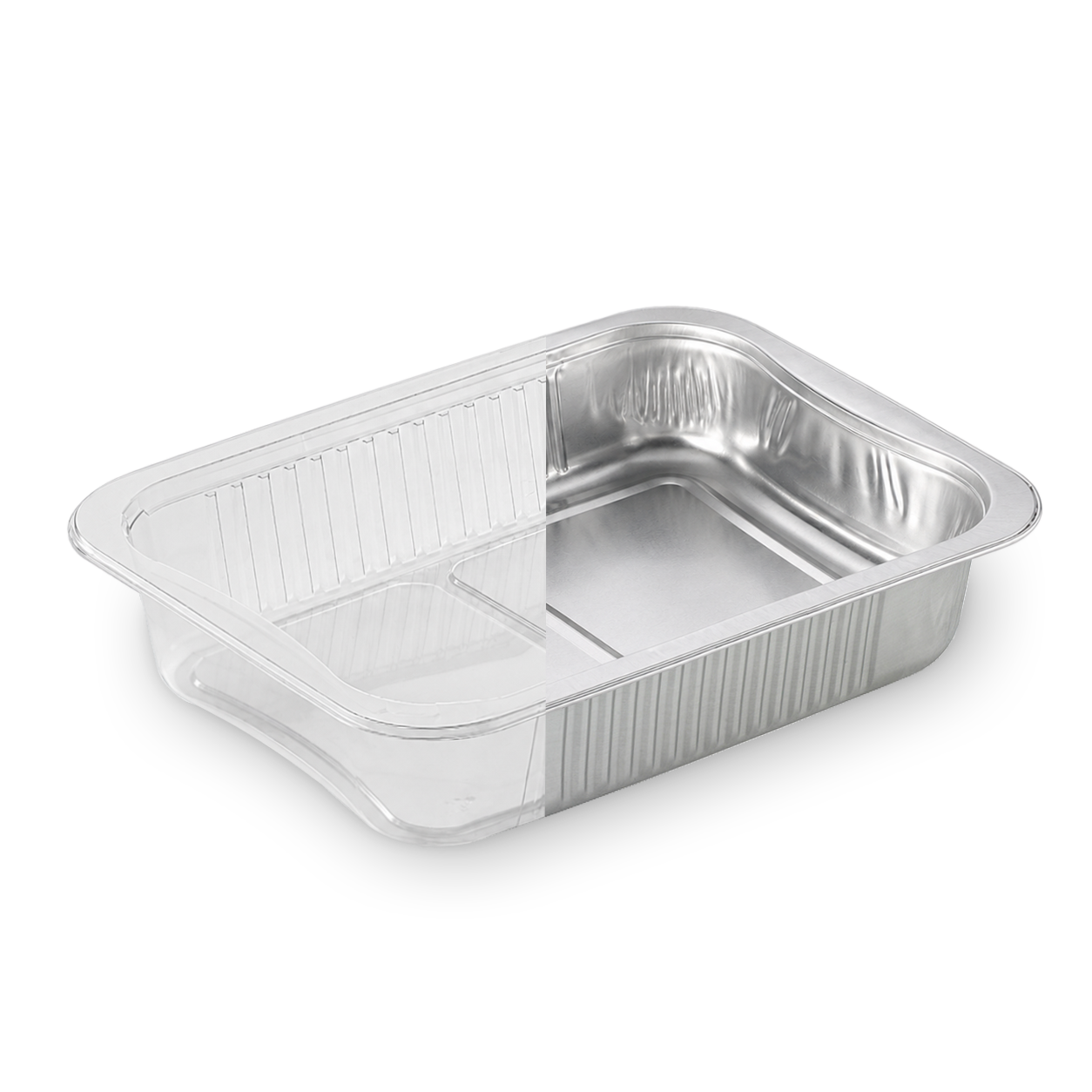
Explore Our Ready Meal Packaging Ranges
Plus Pack offers ready meal packaging ranges for different preparation methods, portion formats and presentation requirements.
Explore selected solutions for ready-to-eat, ready-to-heat and ready-to-cook foods.
Ready2Cook® – From Preparation to Oven, Grill and Table
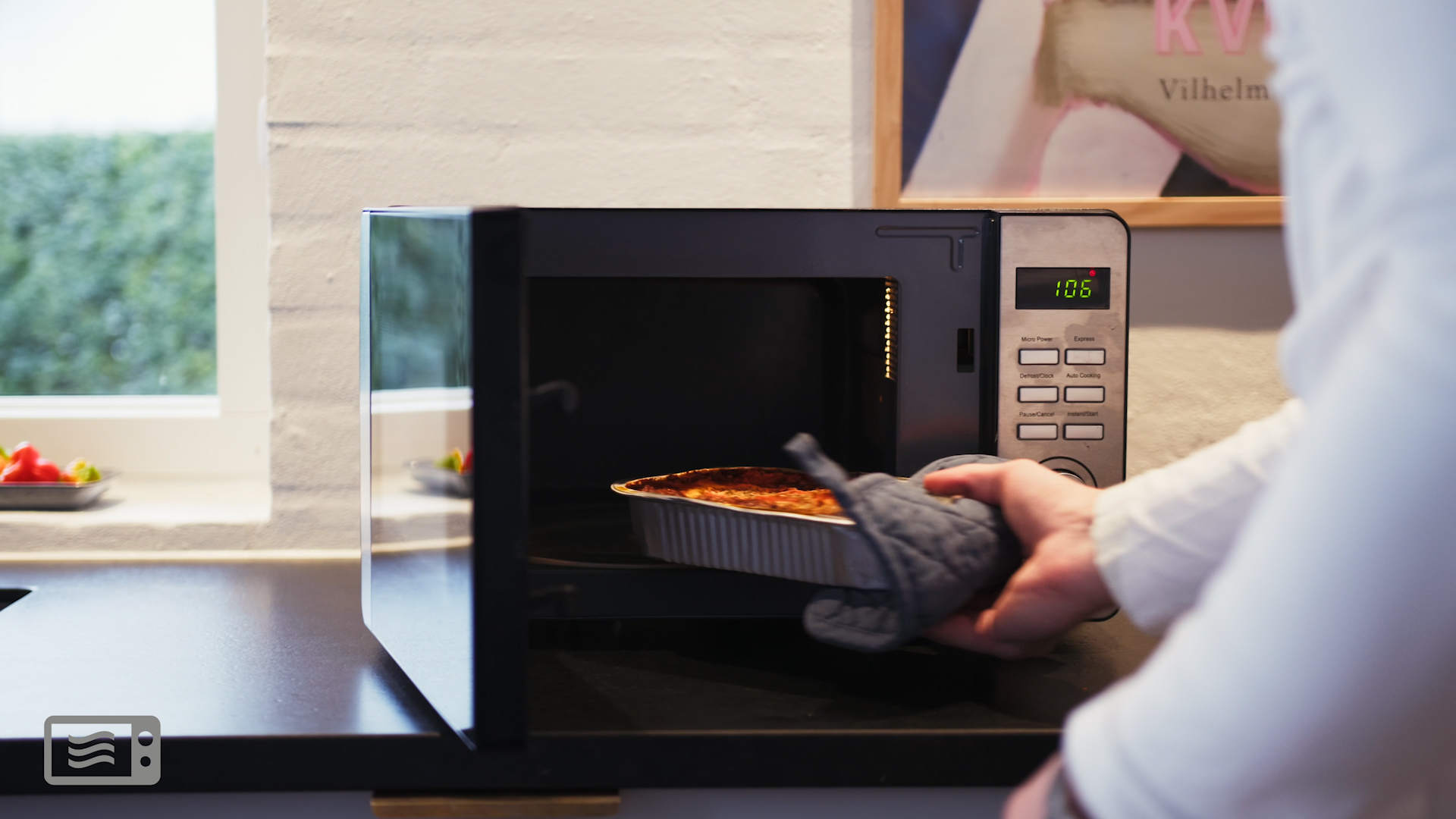
Ready2Cook® is an aluminium food packaging range developed for ready-to-cook and ready-to-heat meal concepts. The containers are suited to applications moving from chilled or frozen storage to final preparation in the oven or on the grill, with aluminium formats also available for microwave use under the relevant conditions.
The range includes multiple formats and features such as handles, compatible lids, sealing options and inserts for applications where different meal components need to remain separated during preparation. Ready2Cook® is particularly relevant for complete meals, meal kits, meat, fish, vegetables and grill-ready food concepts.
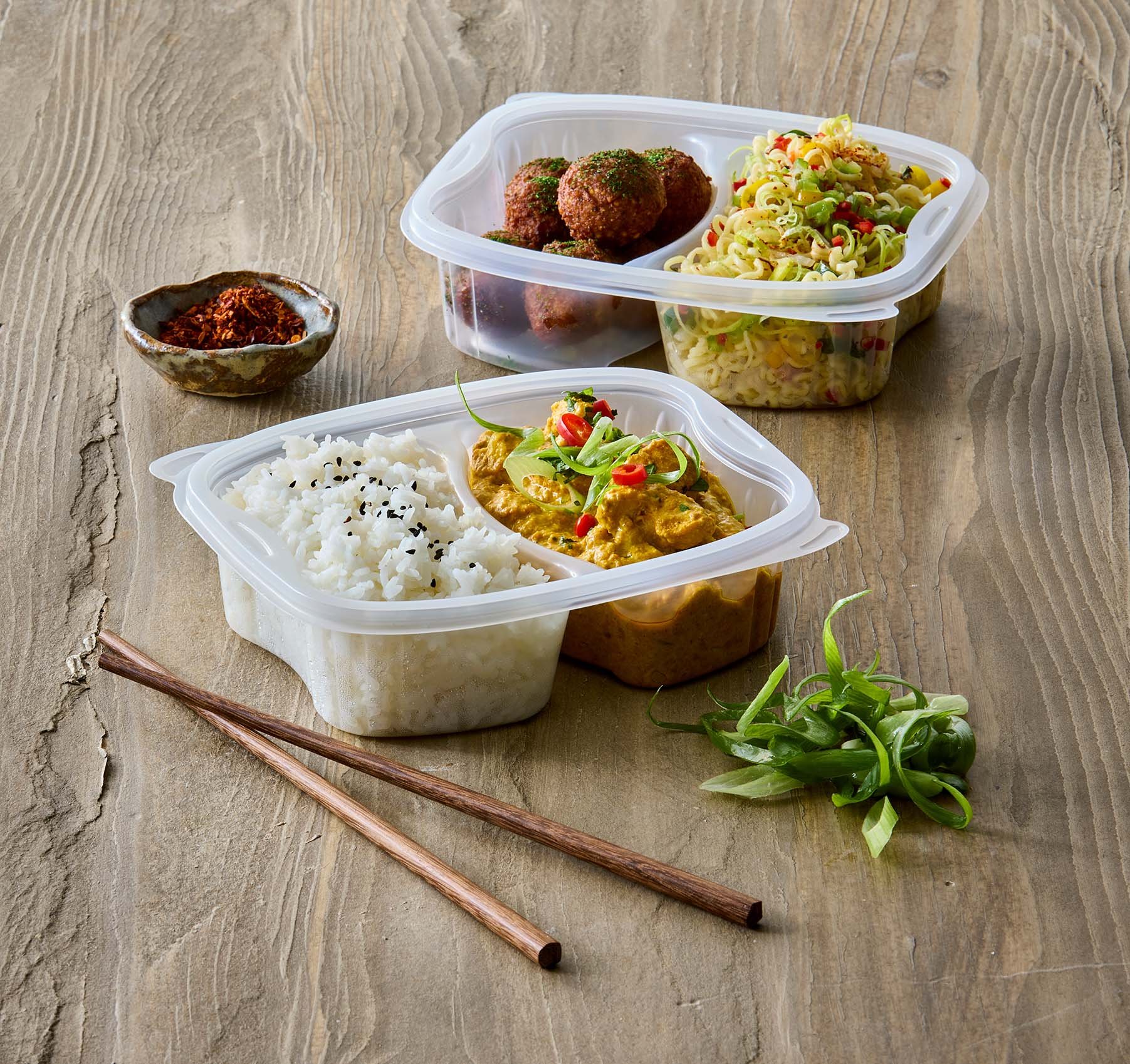
Bistro™ – Ready Meal Trays for Cold and Warm Foods
Bistro™ brings chilled and warm ready meal packaging together within one product family.
Bistro™ Cold includes clear rPET portion trays for salads, fruit, deli foods and other cold ready-to-eat meals. For foods intended for reheating, the Bistro™ Warm range includes PP formats for applications such as pasta, rice, soups and stews.
Different portion sizes and compartment configurations make Bistro™ relevant across retail, foodservice, distribution and industrial ready meal production.
SHELFMASTER™ – A Broad Range for Prepared Foods
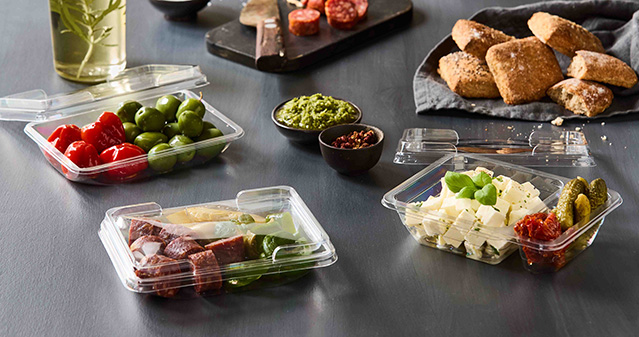
SHELFMASTER™ offers a broad assortment of plastic trays and inserts in different shapes, sizes and compartment configurations.
The range includes rPET and DPET formats for chilled and ready-to-eat foods such as salads, fruit and snacks, as well as selected PP formats for applications requiring microwave performance. Multi-compartment inserts provide additional options where different meal components need to be separated.
The breadth of the SHELFMASTER™ assortment makes it particularly relevant for distributors and food producers requiring multiple prepared food packaging formats within a standard range.
Zen™ – Platters for Ready-to-Eat and Sharing Concepts
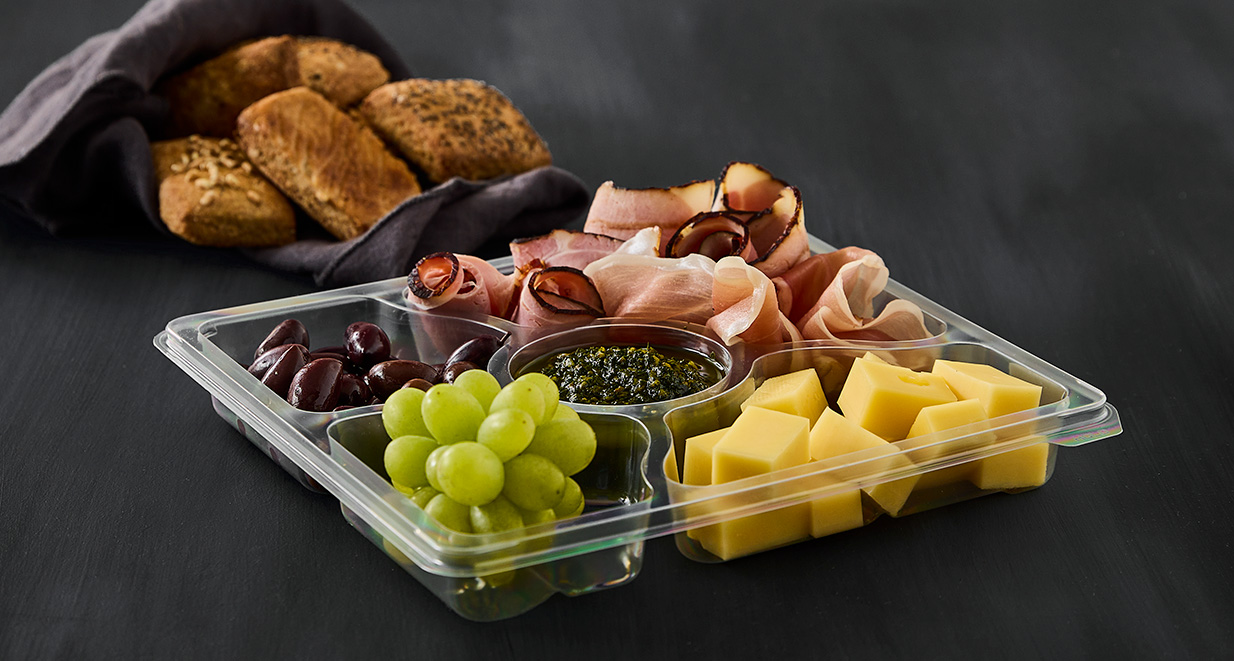
Zen™ is a range of platters developed for ready-to-eat food concepts where presentation and separation of individual components are important.
Zen™ Platters and Zen™ Selection Platters are available in different sizes and compartment configurations for applications such as sushi, tapas, antipasti, wraps, cheese, fruit and desserts. The formats allow several components to be presented together while keeping the food organised and clearly visible.
Zen™ is particularly relevant for ready-to-eat packaging, sharing concepts and prepared foods where presentation is central to the meal experience.

Ready Meal Packaging for Distribution and Industrial Food Production
The right ready meal packaging setup also depends on how the packaging will be purchased and used.
A distributor may need a broad standard assortment covering multiple customer types and food applications, while an industrial food producer needs ready meal trays that perform consistently with filling, sealing and production equipment.
Standard Ready Meal Packaging for Distribution
For distributors, flexibility across food applications is important.
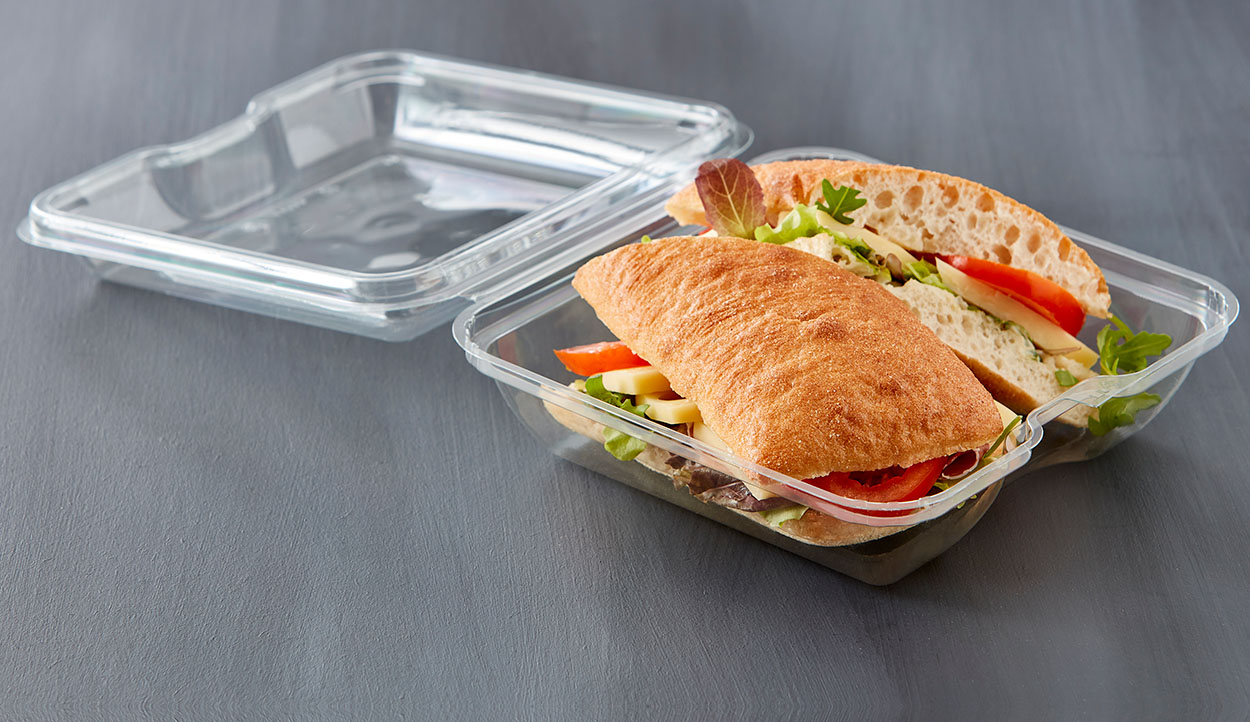
Plus Pack offers ready meal trays and containers across different materials, portion sizes and formats for chilled, microwaveable, ovenable and grill-ready food applications.
Ranges such as Bistro™, SHELFMASTER™, Zen™ and Ready2Cook® provide different routes for serving customers within foodservice, catering, retail, takeaway and professional food production.
A coordinated assortment allows distributors to cover multiple meal concepts while giving customers access to packaging suited to the intended food and preparation method.
Ready Meal Packaging for Industrial Food Production
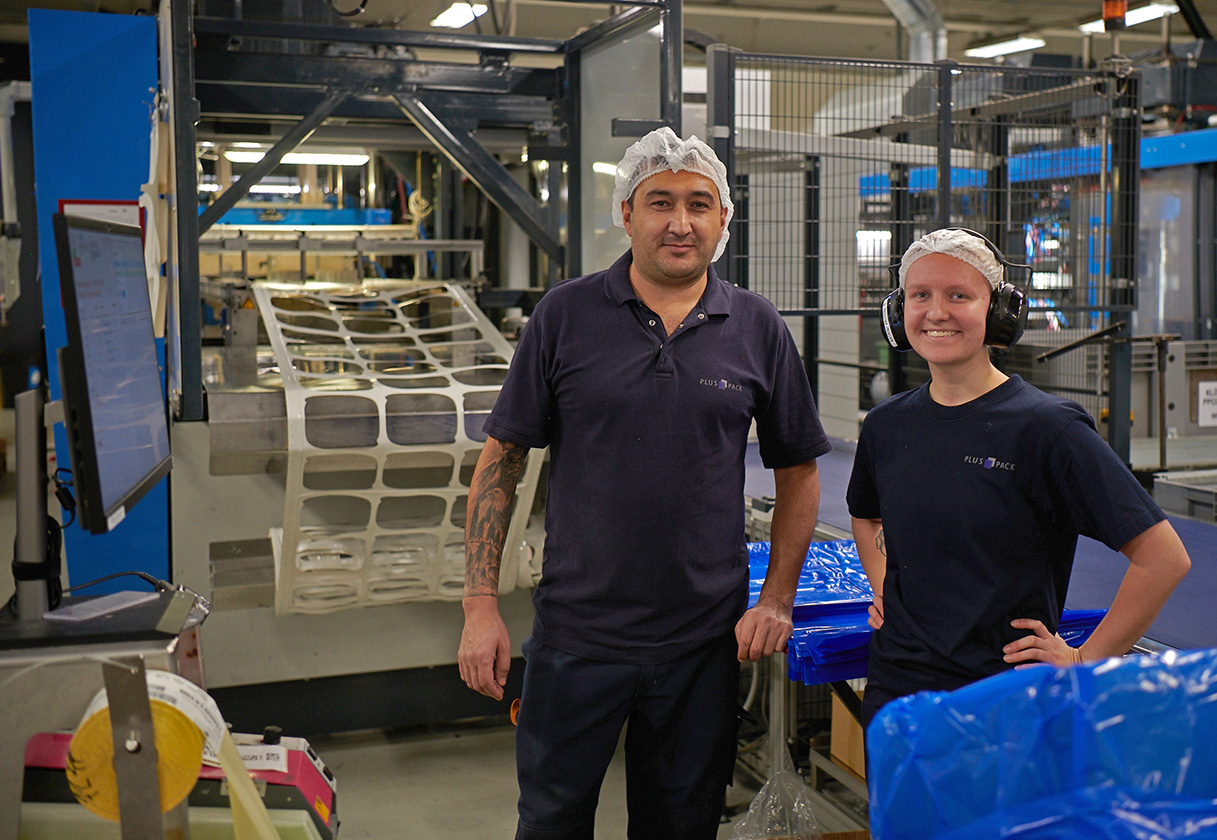
For industrial food producers, packaging performance needs to be considered together with the production process.
· Ready meal trays can be selected or developed according to requirements for:
· Automated denesting and filling
· Industrial sealing
· MAP and Skin Pack applications
· Production-line compatibility
· Stacking and handling
· Transport and palletisation
· Labelling and secondary packaging
Plus Pack works with customers to match tray material, geometry and sealing configuration to both the food product and the production setup.
Sealing, MAP and Customised Ready Meal Packaging
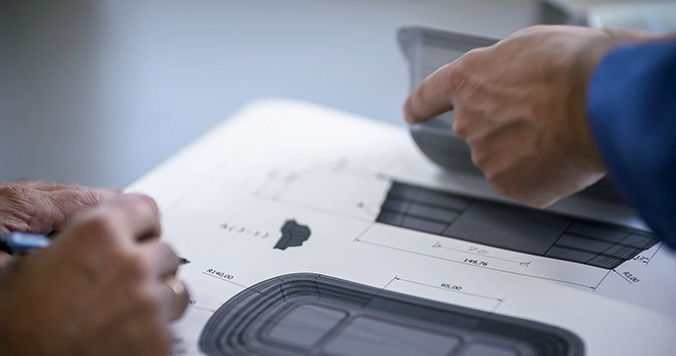
Standard ready meal trays cover many applications, but industrial meal production can require packaging developed around a specific food product, portion size, production setup or packing process.
Plus Pack supports both adaptations of existing packaging and the development of customised ready meal packaging.
Depending on the project, this can include:
· Custom tray dimensions
· Compartments for different meal components
· Material selection based on temperature and process requirements
· Formats developed for automated denesting, filling and sealing
· Sealing configurations suited to the food and production process
· MAP and Skin Pack solutions
· Prototyping and line testing
· Development of tooling
· Technical support during industrial implementation
The objective is to develop packaging that works as part of the complete ready meal system. Food characteristics, filling processes, sealing equipment, transport, retail presentation and consumer preparation can all influence the final packaging design.
What packaging is used for ready meals?
Ready meal packaging can use different materials depending on how the food is stored and prepared. rPET, APET and DPET are primarily used for chilled ready-to-eat foods, PP for microwaveable applications, CPET for microwave and conventional oven applications, and aluminium for ovenable and grill-ready concepts.
Ready meal packaging can use different materials depending on how the food is stored and prepared. rPET, APET and DPET are primarily used for chilled ready-to-eat foods, PP for microwaveable applications, CPET for microwave and conventional oven applications, and aluminium for ovenable and grill-ready concepts.
Which packaging is suitable for chilled ready-to-eat meals?
rPET, APET and DPET ready meal trays can be used for chilled ready-to-eat food applications. The final material and packaging configuration should be selected according to the food product, sealing process, required shelf-life conditions and presentation requirements.
What packaging can be used for microwaveable ready meals?
PP is commonly used for microwaveable ready meal packaging and has a material temperature range of -40°C to +130°C. CPET can also be relevant where the meal needs to support both microwave and conventional oven preparation.
Which ready meal trays can go in the oven?
CPET and aluminium can both provide options for ovenable ready meal trays. CPET has a material temperature range up to +220°C, while aluminium temperature performance depends on the specific container and coating configuration. The complete packaging setup should be validated for the intended application.
What packaging is suitable for grill-ready meals?
Aluminium packaging can be used for grill-ready food applications. Plus Pack's Ready2Cook® range includes aluminium containers developed for ready-to-cook and grill-ready meal concepts.
Can ready meal trays be used with MAP and Skin Pack?
Selected ready meal trays can be specified for MAP and Skin Pack applications. Compatibility depends on the tray material, geometry, sealing surface, film, food product and packing equipment.
Can ready meal packaging be customised?
Yes. Plus Pack develops customised ready meal packaging for industrial food production. This can include tailored dimensions, compartments, material selection, sealing configurations and formats developed around automated filling and packing equipment.
How do I choose the right packaging for a ready meal?
Start with how the meal will be produced, stored, transported and prepared. Temperature requirements, food characteristics, sealing method, shelf-life requirements, production equipment, presentation and consumer preparation all influence which ready meal tray and material are appropriate.
LEARN MORE
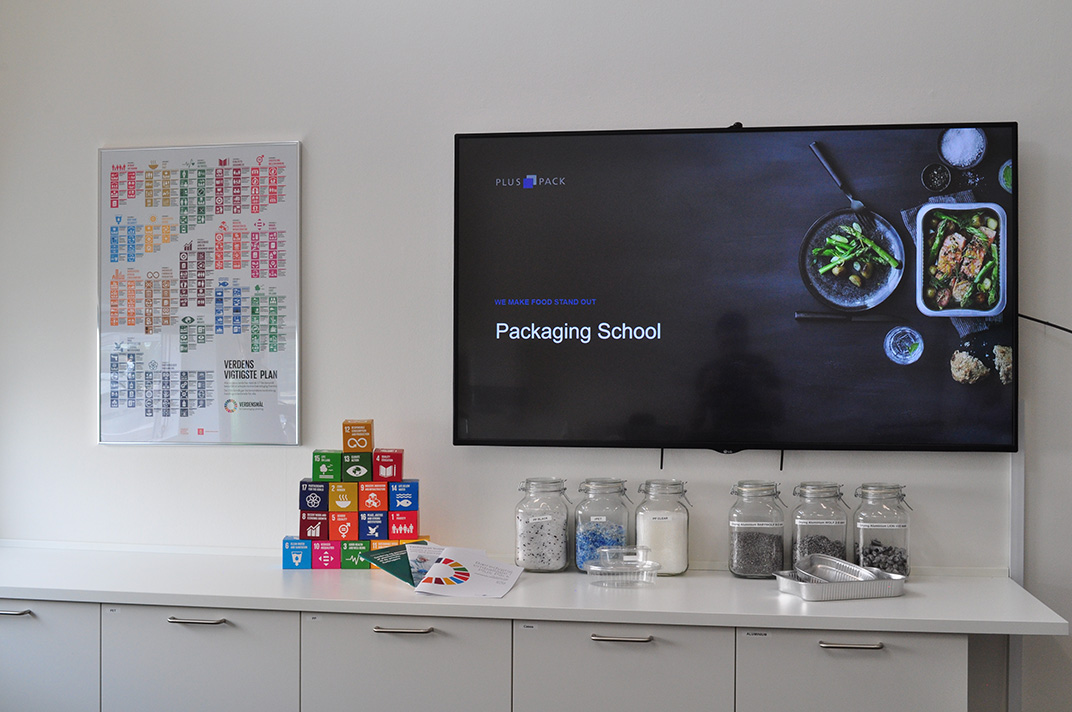
Packaging School
Join our packaging school
Packaging School guides you in the complex world of food packaging. Many things should be taken into consideration before deciding on a new packaging solution.
Aluminium
Aluminium goes in the microwave
Many consumers mistankenly believe that aluminum cannot go into the microwave. But that is not true. Plus Pack is helping to dispel this myth. Click to read more about how.
eCatalogue
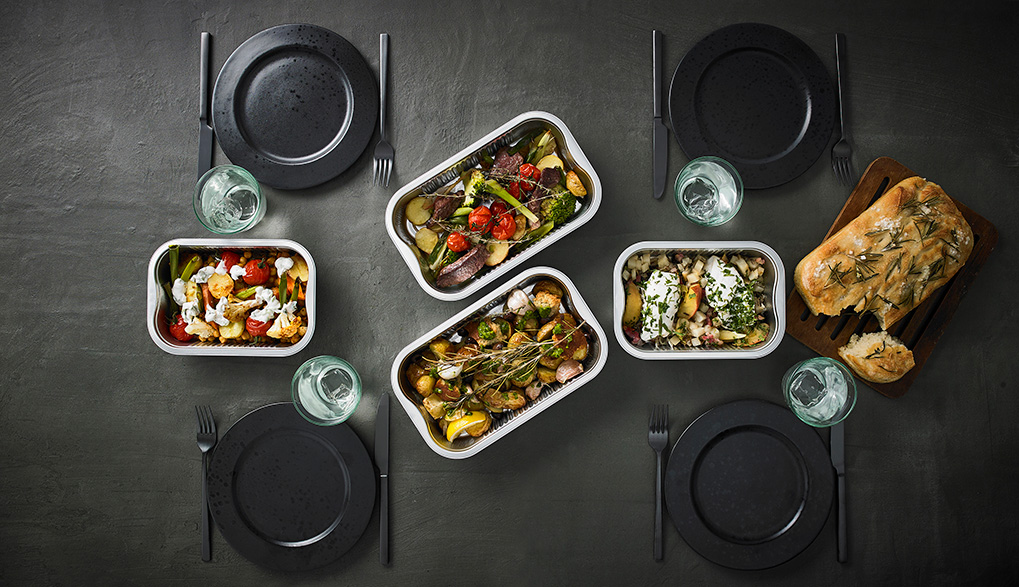
Ready2Cook®
These containers can be used as cooking trays and are perfect for ready-to-cook and ready-to-heat dishes, which offers consumers the convenience of ready meals.