


Placing circularity at the core.
FOR G D.
D.
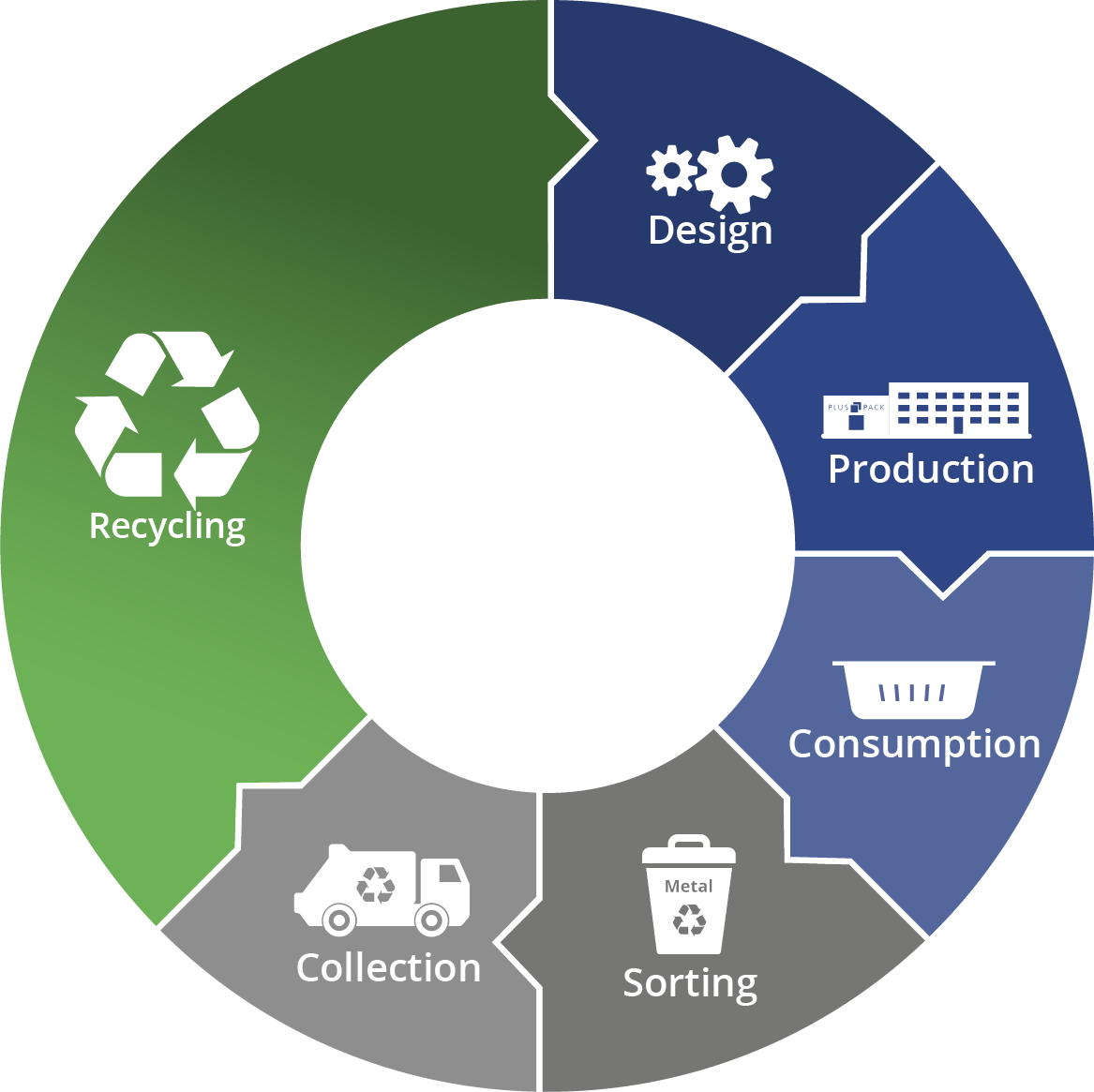
Moving the food packaging industry from a linear towards a more circular economy requires effective collection, sorting, recycling and reuse systems.

Waste handling creates CO2
Why better waste handling matters
Today, significant amounts of packaging waste are incinerated. Incineration generates greenhouse gas emissions and prevents materials from remaining in circulation. However, removing packaging is not necessarily the solution, as packaging plays an important role in protecting food.
Well-designed packaging can help protect food and reduce the risk of food waste. Better collection, sorting, reuse and recycling can help retain material value and reduce reliance on virgin resources.
What is a circular economy
and why is it important?
To understand the importance of a circular economy we must understand a linear economy. In a linear economy, waste handling is often taken care of with incineration or landfill. This means that all our waste is send to incineration plants for burning. Burning waste creates CO2 emissions, and we are all committed to reduce CO2 in order to secure the green transition.
Also, we don’t have unlimited resources, as the European Commission states there is only one planet earth, yet by 2050, the world will be consuming as if there were three. We do not have enough raw materials for the growing population's consumption and the constant CO2 emissions in production. This means there is more waste than ever, and current waste management structures need to be changed.

PLACING
CIRCULARITY
AT THE CORE.
FOR G D.
D.

The question is
What can be done?
Shifting from a linear to a circular economy means seeing waste as a potential resource, rather than waste. Becoming more circular means:
- Using materials to their full potential
- Keeping resources in the loop through recycling and reuse
- Reducing CO2 emissions with optimized production
In a circular economy waste is seen as a valuable resource, and if managed correctly our waste is entering a circular loop, so it can be reused again and again. Not all materials are optimal for recycling or reuse and that is why we need to prioritize only the materials that fit into a circular economy for recycling or reuse.

What is Extended Producer Responsibility?
how it affects your business?
Extended Producer Responsibility (EPR) is changing how companies handle packaging waste. Learn what it means for your business — and how to stay compliant.
Learn more about Extended Producer Responsibility
LEARN MORE
Sustainability
Our approach to sustainability
There are no easy solutions when it comes to changing our industry. But going circular is not only the smart way forward. It’s the only way forward.
Sustainability
Responsible partnerships
We involve ourselves in domestic as well as international partnerships and collaborations to push for the green transition. Read more to learn how.
Approach
Innovation
Working closely with our customers, we focus on exploring and innovating new packaging solutions designed for recyclability and to protect food.