


How can PET plastic packaging:
Materials and Solutions
Plastic packaging for food includes several materials with different performance characteristics. rPET, APET and DPET are used primarily for chilled applications, PP for warm and microwaveable foods, and CPET for applications requiring higher temperature resistance.
Choosing the right plastic packaging material depends on factors such as temperature, product visibility, sealing requirements, production setup and how the food will ultimately be prepared.
Plus Pack develops and manufactures plastic trays, containers and lids for professional food applications. From a broad standard assortment for distributors to solutions developed for industrial filling, sealing and customised production setups, we help match the packaging material and format to the food and process requirements.
Why Choose Plastic Packaging for Food?
Different plastic packaging materials provide different functional properties, making it possible to select packaging according to the food product and application.
Depending on the material and packaging configuration, relevant properties can include:
· Clear product presentation for chilled food applications
· Options for chilled, frozen, microwaveable and ovenable foods
· Compatibility with industrial filling and sealing
· MAP and Skin Pack options for selected packaging configurations
· Standard and customised tray formats for different food and production setup
Plastic is not one material. Understanding the differences between rPET, APET, DPET, PP, PP Chalk and CPET is therefore an important part of choosing the right plastic food packaging.
Which Plastic Packaging Material Should You Choose?
Different types of plastic packaging for food perform differently depending on how the food is produced, stored, transported and prepared.
A chilled salad, for example, has different material requirements from a microwaveable ready meal or a meal intended for preparation in a conventional oven.
The exact functionality and shelf life of a packaging solution depend on the food product and complete packaging setup and should be validated for the intended application.
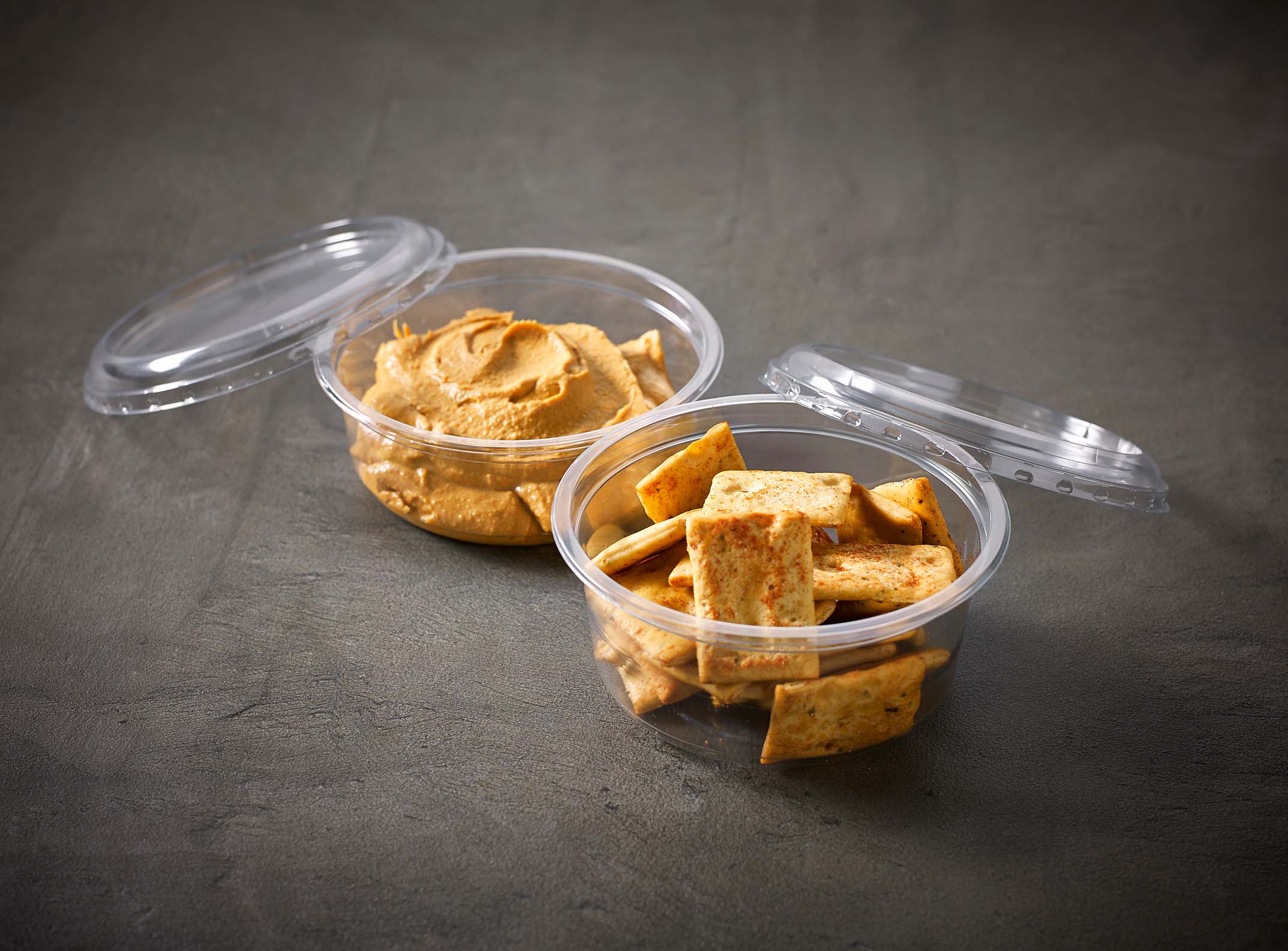
rPET Packaging for Chilled Food
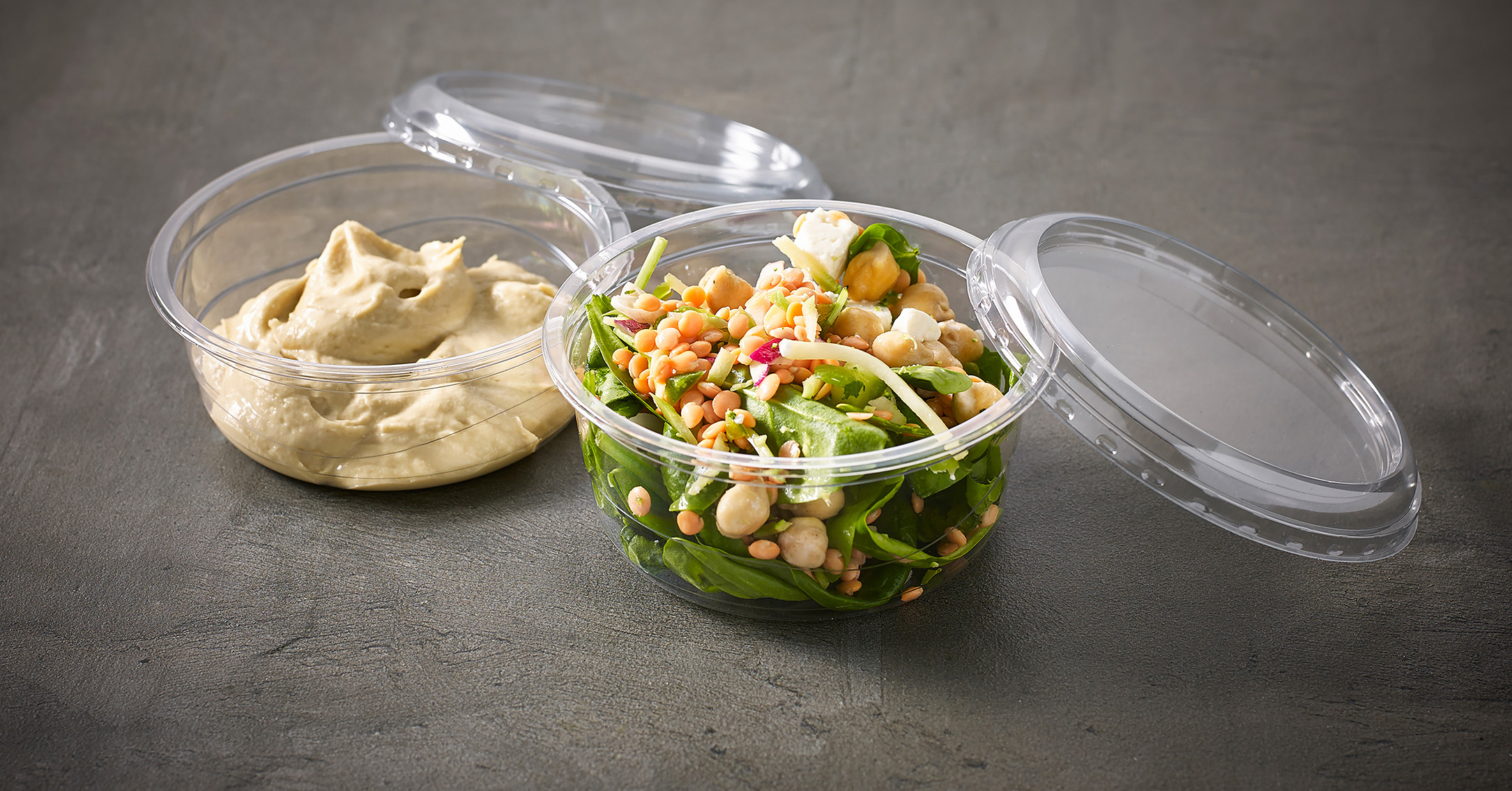
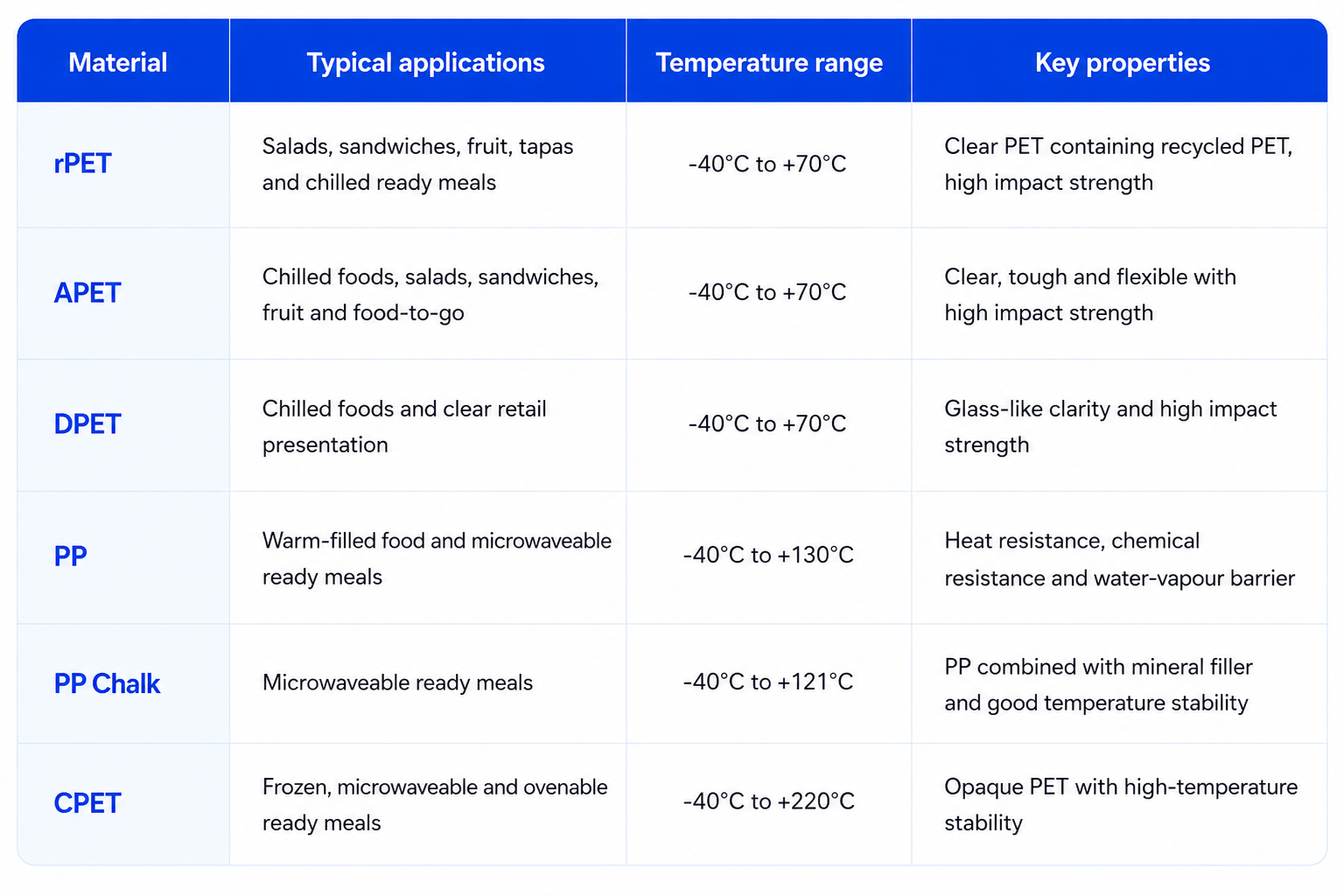
rPET is a PET-based plastic packaging material containing recycled PET, primarily used for chilled applications such as salads, sandwiches, fruit and tapas.
It offers clear product presentation and high impact strength within a temperature range of -40°C to +70°C, though clarity can vary slightly depending on the recycled content used.
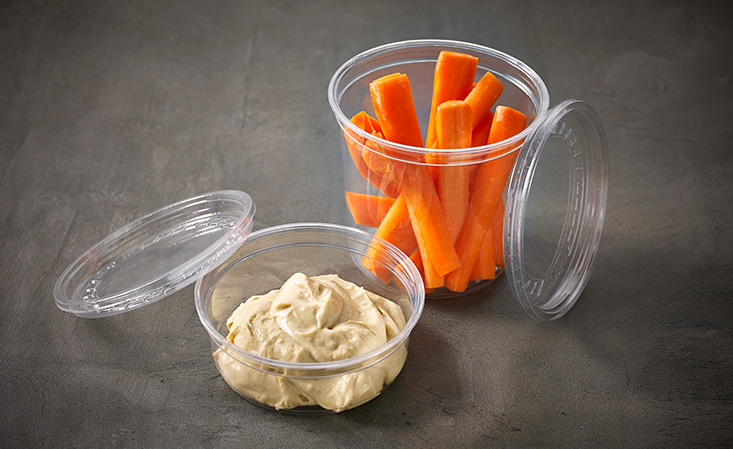
What Is APET Plastic?
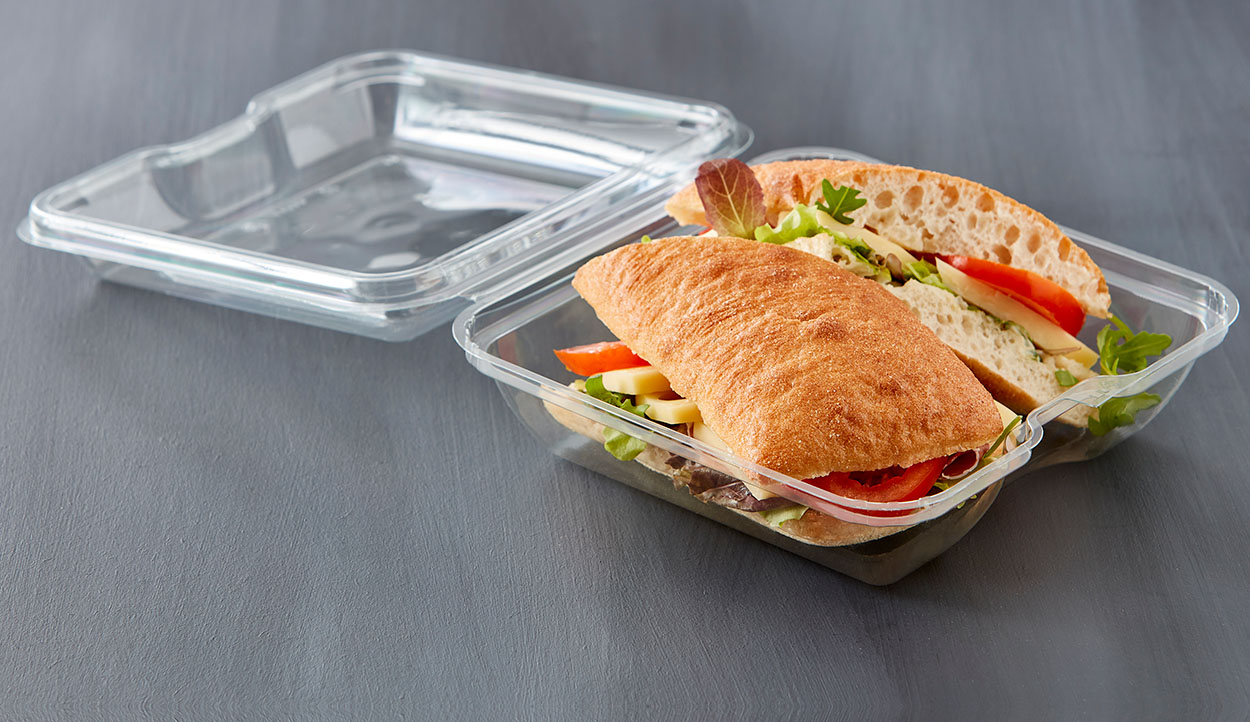
APET is a clear, PET-based plastic packaging material used primarily for chilled foods such as salads, sandwiches, fruit and food-to-go concepts.
It offers a tough, flexible structure with high impact strength and can be used from -40°C to +70°C — suitable for chilled and freezer applications, but not microwave, oven or grill use.
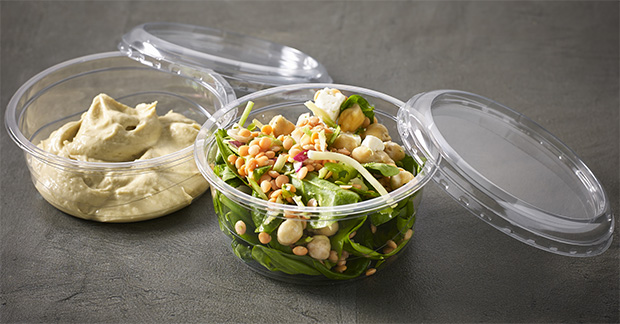
DPET for Clear Chilled Food Packaging
DPET stands for direct-to-sheet PET and provides a glass-like clear appearance.
It is mainly used for cold foods such as salads, sandwiches, fruit and tapas where clear product presentation is important. DPET provides high impact strength and can be used from -40°C to +70°C.
Like APET and rPET, DPET is intended for chilled and freezer applications rather than microwave or conventional oven heating.
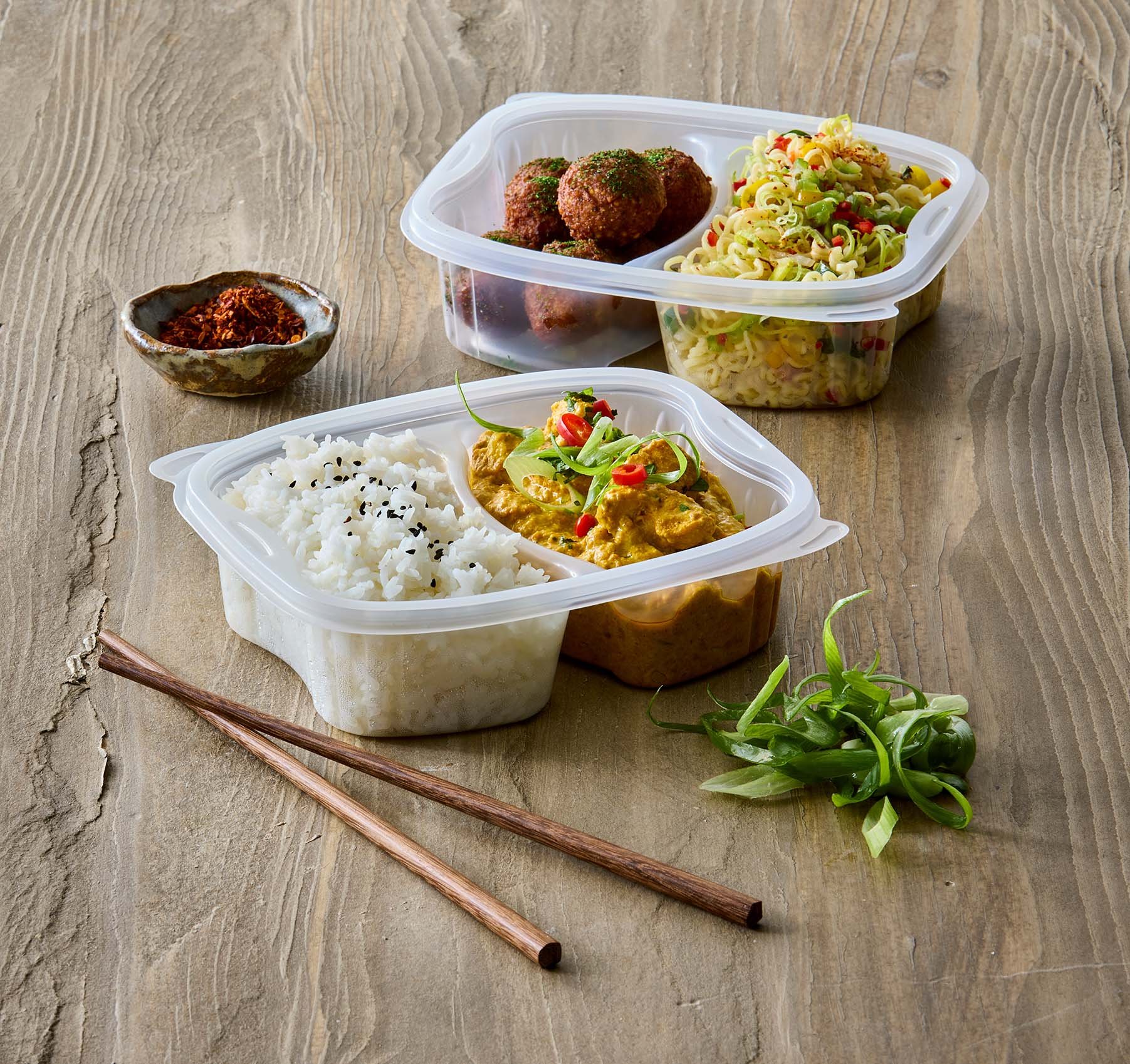
PP Packaging for Warm and Microwaveable Food
Polypropylene, or PP, is used for food applications requiring higher temperature resistance than PET materials typically used for chilled packaging.
PP is suited to warm-filled foods and products intended for microwave reheating, including ready-to-heat meals. It can be used within a temperature range of -40°C to +130°C.
The material also provides high resistance to chemical solvents, acids and alkalis and strong barrier properties against water vapour.
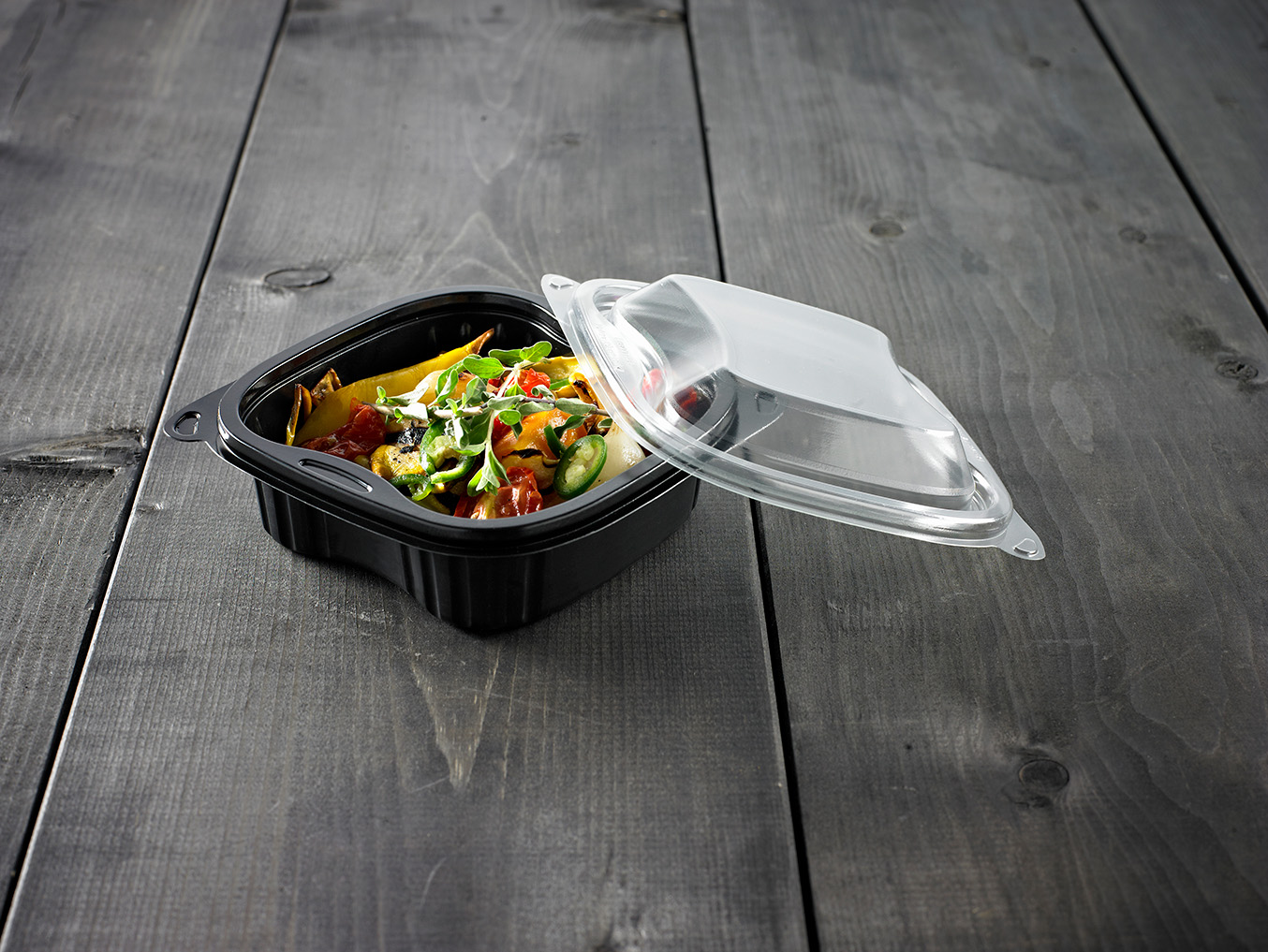
PP Chalk for Microwaveable Ready Meals
PP Chalk is a variation within the polypropylene family in which PP is combined with a mineral filler.
The material is used for ready meals intended for microwave reheating and can be used from -40°C to +121°C. The mineral content affects its processing and mechanical characteristics and provides good temperature stability.
Unlike standard PP, PP Chalk is not a mono-material.
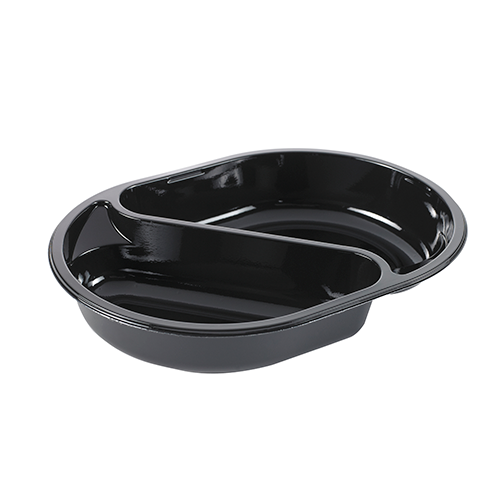
CPET Trays for Ovenable Food
CPET, also written as C-PET, is a crystallised PET packaging material developed for applications requiring higher temperature resistance
CPET food trays are particularly relevant for ready-to-heat and ready-to-cook meals and can be used across freezer, microwave and conventional oven applications. The material has a temperature range from -40°C to +220°C.
Unlike APET, DPET and rPET, CPET has an opaque appearance. As a food packaging manufacturer, Plus Pack offers CPET trays for professional ready-meal applications where higher-temperature performance is required.

Explore Our Plastic Food Packaging Ranges
Plus Pack offers plastic food packaging ranges for different foods, presentation requirements and packing processes. Explore selected standard ranges below and find the format that fits your application.
Bistro™ – Plastic Trays for Cold and Warm Meals
Bistro™ provides portion packaging for both chilled and warm food applications. The range includes clear rPET trays for salads, deli products and other cold ready-to-eat foods, as well as PP trays for meals intended for microwave reheating.
Different formats and compartment options make Bistro™ relevant across retail, foodservice, distribution and professional food production.
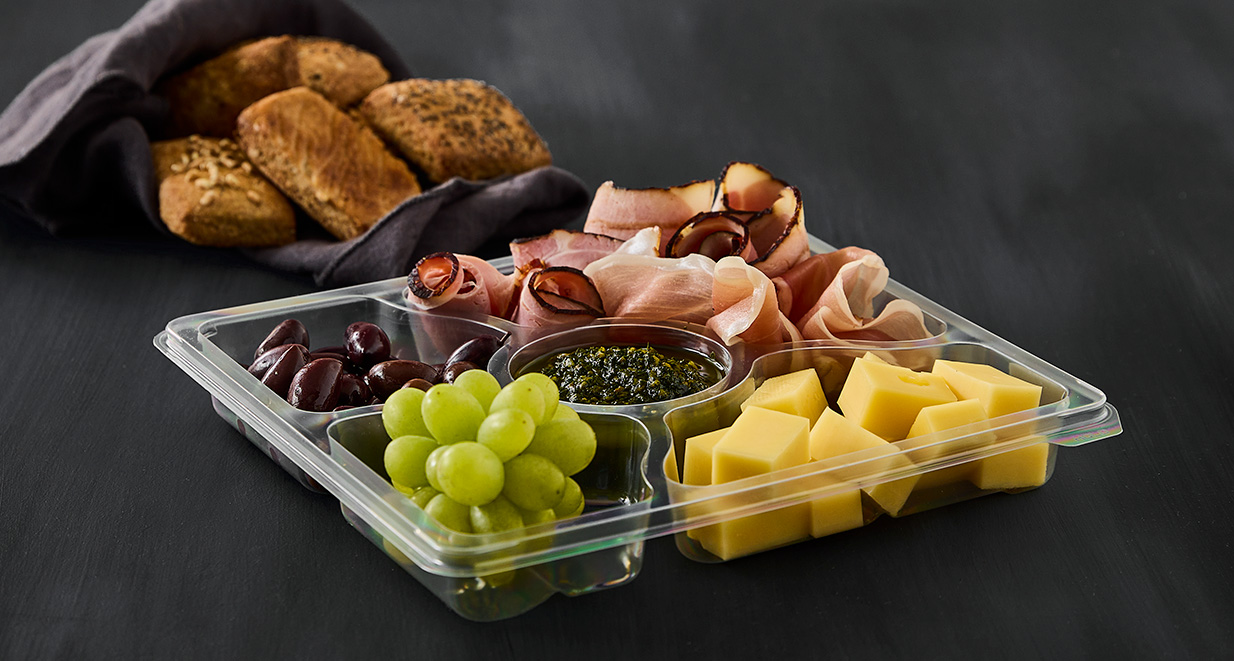
Zen™ – rPET Platters for Food Presentation
Zen™ is a range of rPET platters for foods where presentation and separation of meal components are important.
Different sizes and compartment configurations support applications such as sushi, tapas, antipasti, wraps, cheese and fruit across retail, catering and ready-to-eat food concepts.
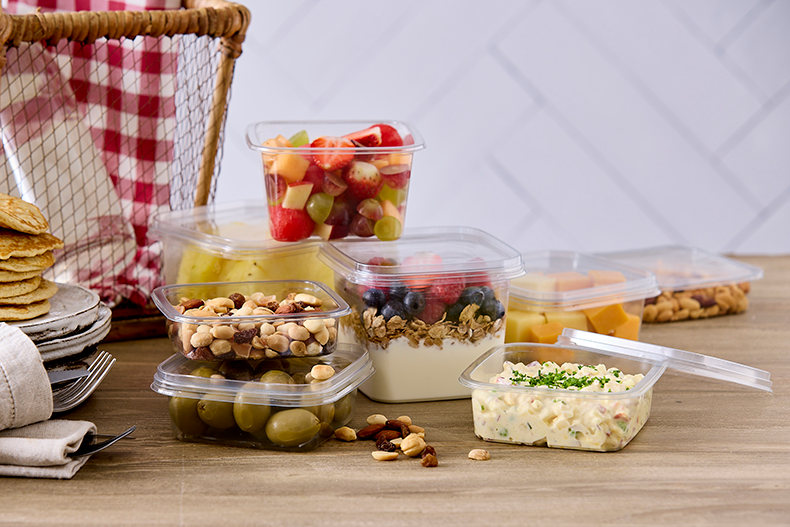
Cubus™ – Flexible rPET Trays for Chilled Foods
Cubus™ consists of square clear rPET trays in different sizes for chilled foods and snacks such as salads, fruit, nuts, tapas and yoghurt.
Multiple tray sizes use a common lid format and can also be combined with sealing film, making Cubus™ relevant both as a standard assortment and for food production applications requiring sealing.

Plastic Packaging for Distribution and Industrial Food Production
Packaging requirements differ depending on whether you need a flexible standard assortment for resale or a solution that must integrate into an industrial food production process.
Plus Pack supports both.

Standard Plastic Packaging for Distribution
For distributors, a broad assortment makes it possible to serve different customer groups and food applications from a coordinated packaging portfolio.
Plus Pack offers standard plastic trays, containers and lids across different materials, sizes and formats for applications within foodservice, takeaway, catering, retail and food production.
The assortment includes different portion formats, tray and lid combinations and material options for chilled and microwaveable food applications.
Plastic Packaging for Industrial Filling and Sealing
For industrial food producers, the packaging must work consistently with the production process as well as with the food product.
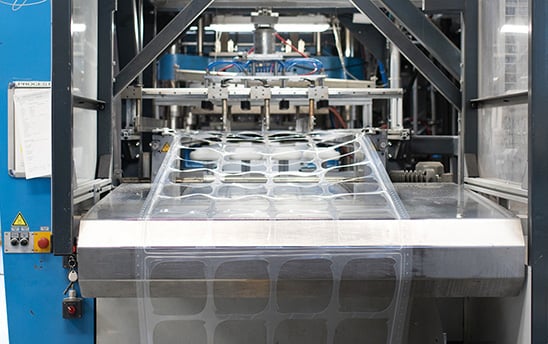
Plus Pack develops plastic trays for automated denesting, filling and sealing. Depending on the tray material, design, sealing surface, film and equipment setup, solutions can also be specified for MAP and Skin Pack applications.
Material behaviour, sealing performance, stacking, handling and integration with existing packing equipment should therefore be considered together when selecting a plastic packaging solution.

Customised Plastic Packaging for Your Production Setup
Standard plastic trays cover many food applications, but not every product, process or packing line fits an existing format.
Customisation is an important part of Plus Pack's approach to industrial food packaging. A customised plastic tray can be developed around requirements such as food characteristics, dimensions, functionality, material, presentation, filling and sealing equipment and logistics.
Depending on the project, this can include:
· Developing a completely new plastic tray
· Adapting an existing standard format
· Optimising tray dimensions and geometry for the food product
· Developing compartment configurations for specific meal concepts
· Designing for automated denesting, filling and sealing
· Selecting the plastic material according to temperature, process and setup
· Prototyping and testing before industrial implementation
· Development of tooling and support during implementation
The objective is not simply to create a different tray shape. The packaging should work as part of the complete system — from the food product and production equipment to sealing, handling, transport, presentation and final use.
Plus Pack supports the development process from initial requirements and concept development through design, prototyping, tooling and industrial implementation.
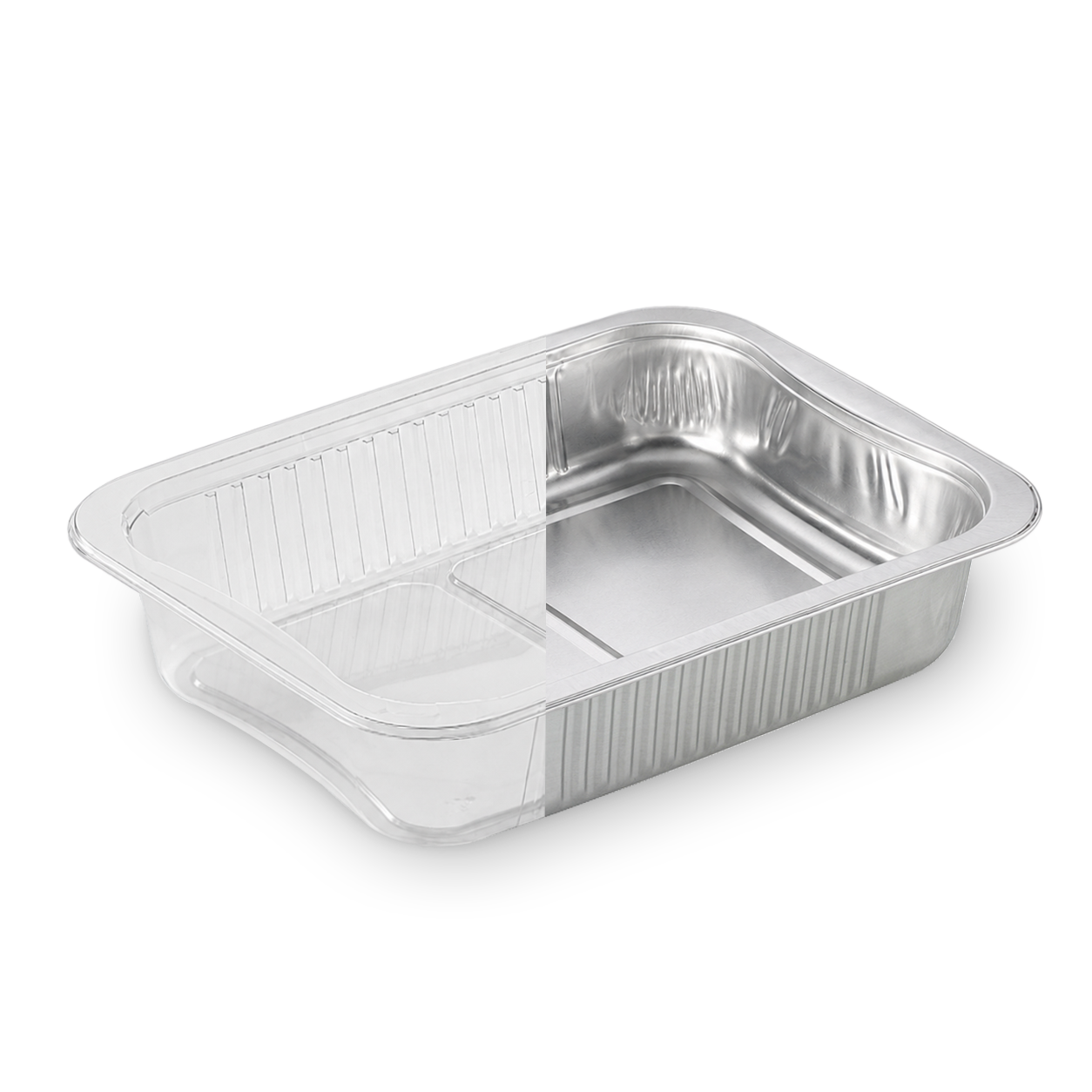
When Is Aluminium a Better Choice Than Plastic?
Plastic and aluminium provide different performance characteristics, and the right material depends on the application.
For example, applications involving direct grill heat or temperatures outside the specification of the relevant plastic material may require an aluminium solution instead.
Temperature, barrier requirements, food characteristics, production process and final preparation method should therefore all be considered when choosing between plastic and aluminium food packaging.
What types of plastic packaging are used for food?
Different plastic packaging materials suit different food applications. rPET, APET and DPET are primarily used for chilled foods, PP for warm-filled and microwaveable applications, and CPET for applications requiring higher temperature resistance, including ovenable ready meals.
What is the difference between APET and rPET?
APET and rPET are both PET-based materials used mainly for chilled food packaging. rPET contains recycled PET, while APET has a different material construction. Both provide clear product presentation, although the appearance of rPET can vary depending on the recycled material used.
What are CPET trays used for?
CPET food trays are used for applications requiring higher temperature resistance, particularly ready-to-heat and ready-to-cook meals. CPET can be used across freezer, microwave and conventional oven applications.
Are CPET trays oven-safe?
CPET has a material temperature range of up to +220°C according to the Plus Pack Material Guide. The permitted heating conditions for an individual tray and complete packaging configuration should always be confirmed for the specific application.
Which plastic packaging material is suitable for microwaveable food?
PP is commonly used for warm-filled and microwaveable food applications and has a material temperature range of -40°C to +130°C. CPET can also be relevant where both microwave and conventional oven performance are required.
Can plastic food trays be used with MAP and Skin Pack?
Selected plastic trays can be developed for MAP and Skin Pack applications. Compatibility depends on the tray material and design, sealing surface, film, food product and packing equipment.
Does Plus Pack manufacture customised plastic trays?
Yes. Plus Pack develops customised plastic packaging for industrial food applications. Solutions can be developed from new concepts or based on adaptations of existing formats, taking the food product, material, dimensions, filling, sealing, logistics and production requirements into account.
LEARN MORE

Approach
Services - supporting your success
From onsite technical support and CPQ to our Packaging School, we have many ways to help solve your packaging challenges. For good.
Case
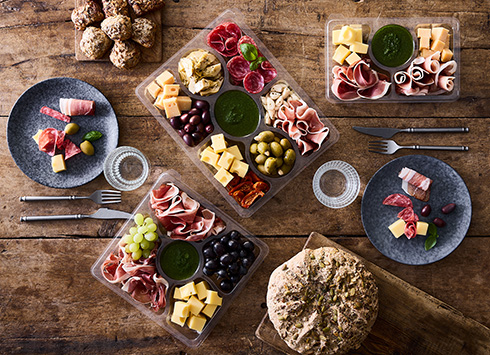
New optimized zen™ selection platter
These days, many retailers and food industries look for packaging solutions that can help them reach their sustainability goals. Learn how we helped a customer do that.

Circularity
Why is recycling so important
To transform the food packaging industry from a linear to a circular economy, recycling is inevitable. It is crucial that we act now. For good.